

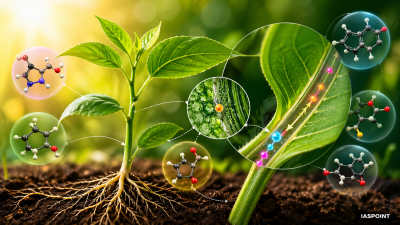
Plant hormones, also known as Phytohormones or Plant Growth Regulators (PGRs), are small, simple molecules of diverse chemical composition. They are produced in minute quantities in one part of the plant body and are often translocated to another part where they influence physiological processes.
Classification of Phytohormones
PGRs are broadly divided into two groups based on their functions in a living plant body:
- Plant Growth Promoters: Involved in growth-promoting activities such as cell division, cell enlargement, pattern formation, tropic growth, flowering, fruiting, and seed formation. Examples: Auxins, Gibberellins, and Cytokinins.
- Plant Growth Inhibitors: Involved in various growth-inhibiting activities such as dormancy and abscission. They also play an important role in plant responses to wounds and stresses of biotic and abiotic origin. Examples: Abscisic acid (ABA).
- Gaseous PGR: Ethylene is a unique gaseous hormone that fits into both categories but is largely an inhibitor of growth activities.
1. Auxins (Indole-3-Acetic Acid)
Auxins were the first growth hormones discovered. Charles Darwin and his son Francis Darwin observed the phototropism of canary grass coleoptiles.
- Key Chemical Forms: Indole-3-acetic acid (IAA) and indole butyric acid (IBA) are natural auxins; NAA (Naphthalene acetic acid) and 2, 4-D (2, 4-dichlorophenoxyacetic) are synthetic auxins.
- Functions:
- Apical Dominance: Presence of apical buds inhibits the growth of lateral (axillary) buds.
- Root Initiation: Used extensively in tea plantations and horticulture for stem cuttings.
- Prevention of Abscission: They prevent fruit and leaf drop at early stages but promote the abscission of older mature leaves and fruits.
- Parthenocarpy: Induces fruit formation without fertilization (e.g., in tomatoes).
- Herbicides: 2, 4-D is widely used to kill dicotyledonous weeds (Selective Weedicide).
2. Gibberellins (GA)
There are more than 100 gibberellins reported from widely different organisms like fungi and higher plants. GA3 (Gibberellic acid) was one of the first to be discovered.
- Functions:
- Bolting: Promotes internode elongation just prior to flowering in rosette plants like beet and cabbage.
- Breaking Dormancy: Overcomes seed and bud dormancy.
- Malting Process: Used in the brewing industry to speed up the malting process.
- Increasing Yield: Spraying sugarcane crops with gibberellins increases the length of the stem, thus increasing the yield by as much as 20 tonnes per acre.
- Delaying Senescence: Allows fruits to be left on the tree longer to extend the market period.
3. Cytokinins
These were discovered as Kinetin (a modified form of adenine) from the autoclaved herring sperm DNA. Kinetin does not occur naturally in plants.
- Natural Forms: Zeatin (isolated from corn-kernels and coconut milk).
- Functions:
- Cell Division: Promotes rapid cytokinesis in root apices, developing shoot buds, and young fruits.
- Overcoming Apical Dominance: Helps in the growth of lateral buds even when the apical bud is present.
- Nutrient Mobilization: Delay leaf senescence by promoting nutrient mobilization.
- Morphogenesis: Plays a critical role along with Auxin in root and shoot differentiation (High Cytokinin/Auxin ratio promotes shoots; Low ratio promotes roots).
4. Ethylene (The Gaseous Hormone)
Ethylene is a simple gaseous PGR, synthesized in large amounts by tissues undergoing senescence and ripening fruits.
- Functions:
- Fruit Ripening: Enhances the respiration rate during ripening of the fruits (Respiratory Climacteric).
- Triple Response: Slowing of horizontal growth, swelling of the axis, and apical hook formation in dicot seedlings.
- Abscission and Senescence: Promotes leaf and flower senescence and abscission.
- Breaking Dormancy: Initiates seed germination in peanut seeds and sprouting of potato tubers.
- Sex Expression: Promotes female flowers in cucumbers, thereby increasing the yield.
- Commercial Source: Ethephon is the most widely used source of ethylene in agriculture.
5. Abscisic Acid (ABA) – The Stress Hormone
ABA acts as a general plant growth inhibitor and an inhibitor of plant metabolism. It acts as an antagonist to GAs.
- Functions:
- Stomatal Closure: Stimulates the closure of stomata in the epidermis and increases the tolerance of plants to various kinds of stresses.
- Seed Dormancy: Induces dormancy, helping seeds to withstand desiccation and other factors unfavorable for growth.
- Inhibition: Inhibits seed germination and plant metabolism during stress.
Summary Table: Hormones and Primary Functions
| Hormone | Major Site of Synthesis | Primary Function | Commercial/Field Application |
| Auxin | Growing apices of stems/roots | Cell elongation & Apical dominance | Weedicide (2, 4-D), Rooting powder |
| Gibberellin | Young leaves, seeds, roots | Internode elongation & Bolting | Malting in brewing, Sugarcane yield |
| Cytokinin | Root apices, developing fruits | Cell division & Delaying senescence | Tissue culture, Lateral bud growth |
| Ethylene | Ripening fruits, senescing tissues | Fruit ripening | Ethephon for artificial ripening |
| Abscisic Acid | Chloroplasts, older leaves | Stress response & Dormancy | Seed storage, Drought resistance |
UPSC Prelims Facts & Trivia
- Bakane (Foolish Seedling) Disease: This disease of rice seedlings was caused by the fungal pathogen Gibberella fujikuroi, which led to the discovery of Gibberellins.
- Discovery of Auxin: F.W. Went isolated auxin from the tips of coleoptiles of oat (Avena) seedlings.
- Antagonistic Pairs: Abscisic Acid (ABA) is often called the antagonist to Gibberellic Acid (GA) because they have opposite effects on seed dormancy and germination.
- Phyllotaxy vs. Plasticity: While hormones control growth, the environment triggers “Plasticity” (e.g., different leaf shapes in water vs. air in the Buttercup plant).