

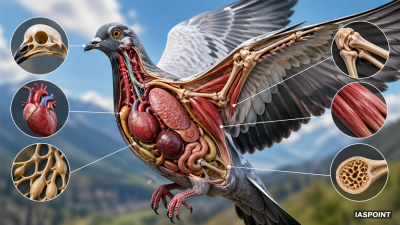
The internal anatomy of birds is characterized by extreme physiological efficiency and structural modifications aimed at supporting a high metabolic rate and flight.
Digestive System: Specialized for Rapid Processing
Since birds lack teeth, the digestive tract is modified to perform mechanical grinding and rapid chemical digestion to keep the body weight low.
- Crop: An enlargement of the esophagus used to store food temporarily. It allows birds to consume large quantities quickly and digest it later in a safe location. In pigeons, it produces “crop milk” for hatchlings.
- Proventriculus (Glandular Stomach): The first part of the stomach where digestive enzymes and acids are secreted to begin chemical breakdown.
- Gizzard (Ventriculus): A thick, muscular organ that performs the function of teeth. Many birds swallow small stones (gastroliths) that stay in the gizzard to help grind tough seeds and grains.
- Cloaca: A common chamber at the end of the digestive tract where the digestive, urinary, and reproductive systems terminate.
Respiratory System: The “Double Respiration” Mechanism
Birds have the most efficient respiratory system among vertebrates to meet the massive oxygen demands of flight.
- Air Sacs: Most birds have nine non-vascular air sacs (anterior and posterior) that act as bellows to move air through the lungs. They do not perform gas exchange themselves but ensure a continuous flow of fresh air.
- Unidirectional Flow: Unlike mammals, where air goes in and out of the same tubes (bidirectional), air in birds flows in one direction through the lungs.
- Double Respiration: Oxygen exchange occurs during both inhalation and exhalation. Fresh air enters the lungs during inhalation, and stored air in the posterior sacs is pushed through the lungs during exhalation.
- Syrinx: Located at the junction of the trachea and bronchi, this is the specialized vocal organ of birds.
Circulatory System: High-Pressure Logistics
To fuel active flight muscles, the avian circulatory system must deliver oxygen and nutrients at high speeds.
- Four-Chambered Heart: Complete separation of the right and left sides prevents the mixing of oxygenated and deoxygenated blood.
- Right Aortic Arch: Unlike mammals, which have a left systemic aortic arch, birds possess a right systemic arch.
- Tachycardia: Birds exhibit very high heart rates; a hummingbird’s heart can beat over 1,200 times per minute during flight.
Excretory System: Weight and Water Conservation
The avian excretory system is adapted for life in the air and the conservation of internal water.
- Metanephric Kidneys: Large, three-lobed kidneys that filter nitrogenous waste.
- Uricotelism: Birds excrete Uric Acid instead of urea. Uric acid is non-toxic and insoluble in water, allowing it to be excreted as a semi-solid paste, which minimizes water loss.
- Absence of Urinary Bladder: To reduce weight, most birds do not store urine. The semi-solid waste passes directly to the cloaca and is expelled with feces.
Nervous System and Sensory Organs
- Brain Development: The Cerebellum is highly developed for muscular coordination and balance during flight. The Optic Lobes are large, reflecting the primary importance of vision.
- Olfaction: The sense of smell is generally poorly developed in most birds, with the notable exception of Kiwis and vultures.
- Vision: Most birds are tetrachromatic, seeing four colors (including ultraviolet). The eye contains a unique structure called the Pecten, a comb-like vascular organ that provides nutrients to the retina without obstructing vision with blood vessels.
Reproductive System
- Asymmetry: In most female birds, only the left ovary and oviduct are functional. The right side is vestigial to reduce weight.
- Internal Fertilization: All birds practice internal fertilization.
- Oviparity: Birds lay cleidoic (shelled) eggs. The shell is made of calcium carbonate and contains pores for the embryo to breathe.
Summary of Internal Anatomical Facts
| System | Key Adaptation for Flight | Biological Fact |
| Digestive | Gizzard | Replaces heavy teeth and jaws. |
| Respiratory | Air Sacs | Provides continuous oxygen; reduces body density. |
| Excretory | Uric Acid | Saves water and reduces weight (no bladder). |
| Circulatory | 4-Chambered Heart | High-efficiency oxygen delivery. |
| Skeletal | Synsacrum | Fused bones provide a rigid, light frame. |