

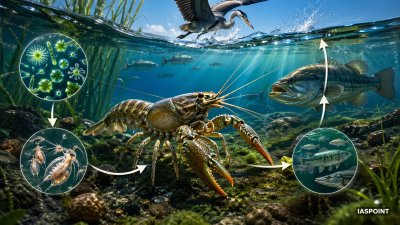
Crustaceans play a fundamental role in maintaining the health and stability of aquatic ecosystems. Their position in the food web makes them indispensable “energy bridges” between microscopic producers and large vertebrates.
Foundation of Food Webs
- Primary Consumers: Small crustaceans, particularly Copepods and Krill, consume vast quantities of phytoplankton. They convert plant-based solar energy into animal protein, which is then accessible to fish, whales, and seabirds.
- Keystone Species: In the Southern Ocean, Antarctic Krill (Euphausia superba) is considered a keystone species. The entire Antarctic ecosystem, including blue whales and penguins, would collapse without this single crustacean group.
Nutrient Cycling and Scavenging
- Benthic Detritivores: Large crustaceans like crabs, lobsters, and crayfish are the primary scavengers of the ocean and river floors. By consuming decaying organic matter (detritus), they prevent the accumulation of waste and recycle essential nutrients back into the ecosystem.
- Bioturbation: Burrowing crustaceans, such as ghost shrimps, stir up marine sediments. This process, known as bioturbation, oxygenates the soil and helps maintain the chemical balance of the seabed.
Symbiotic Relationships
- Mutualism: Certain species, such as the Cleaner Shrimp, perform a “service” for reef fish by removing dead skin and ectoparasites. This promotes the health of fish populations within coral reef ecosystems.
- Commensalism: Barnacles frequently attach themselves to the skin of whales or shells of turtles. While they gain transport to nutrient-rich waters, the host is generally unaffected.
Economic Importance of Crustaceans
The economic value of crustaceans is significant for global food security, trade, and even medical technology.
Global Fisheries and Aquaculture
- High-Value Exports: Prawns, shrimps, crabs, and lobsters are among the most valuable traded commodities in the global seafood market. India is one of the world’s largest exporters of frozen shrimp, particularly to the US and EU markets.
- Livelihood: Small-scale crustacean fishing and large-scale aquaculture (shrimp farming) provide employment to millions of people in coastal regions across the globe.
Scientific and Medical Applications
- Chitin and Chitosan: The exoskeleton of crustaceans is rich in chitin. When processed into chitosan, it is used in:
- Medicine: For bandages and surgical sutures due to its antimicrobial properties and ability to accelerate wound healing.
- Agriculture: As a natural biopesticide and seed coating to enhance plant immunity.
- Water Treatment: To remove heavy metals and impurities from wastewater.
- Bio-indicators: Crustaceans like Daphnia (Water Fleas) are used in laboratories as “sentinel species.” Their sensitivity to toxins allows scientists to monitor the health of freshwater bodies and detect chemical pollutants early.
Comparative Utility of Key Crustacean Products
| Product | Source | Application |
| Glucosamine | Shells of Shrimp/Crabs | Used as a dietary supplement to support joint health and treat osteoarthritis. |
| Lectin | Various Crustaceans | Used in medical research for identifying specific sugar molecules on the surface of cells. |
| Krill Oil | Antarctic Krill | A potent source of Omega-3 fatty acids, often preferred over fish oil for its superior absorption. |
Environmental Challenges and Threats
- Ocean Acidification: As CO2 levels rise, oceans become more acidic. This makes it difficult for crustaceans to absorb the calcium carbonate needed to build their protective exoskeletons.
- Microplastics: Filter-feeding crustaceans often mistake microplastics for plankton. These plastics accumulate in their tissues and move up the food chain, eventually impacting human health.
- Overfishing: Unregulated harvesting of krill and prawns can lead to a collapse of higher-order predators, demonstrating the fragile link between economy and ecology.
UPSC Trivia for Quick Revision
- Blue Economy: Crustacean aquaculture is a vital pillar of India’s Blue Economy 2.0 initiative, aimed at sustainable coastal development.
- Bioluminescence: Some deep-sea crustaceans use chemical reactions to produce light, aiding in communication and predator distraction in the midnight zone.
- Invasive Species: The European Green Crab is a notorious invasive crustacean that disrupts local ecosystems by preying on native mollusks and outcompeting local crab species.