

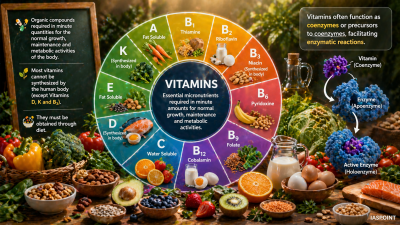
Vitamins are organic compounds required in minute quantities for the normal growth, maintenance, and metabolic activities of the body. Most vitamins cannot be synthesized by the human body (except for Vitamins D, K, and B3) and must be obtained through diet. They often function as coenzymes or precursors to coenzymes, facilitating enzymatic reactions.
Classification of Vitamins
Vitamins are classified into two broad categories based on their solubility, which dictates how they are absorbed, stored, and excreted.
1. Fat-Soluble Vitamins
These are absorbed along with dietary fats and are stored in the liver and adipose (fat) tissues. Because they are stored, excessive intake can lead to toxicity (Hypervitaminosis).
- Vitamins: A, D, E, and K.
2. Water-Soluble Vitamins
These dissolve in water and are not stored in the body for long periods (except B12). Excess amounts are excreted through urine, requiring regular dietary intake.
- Vitamins: B-complex and Vitamin C.
Comprehensive Vitamin Profile
| Vitamin | Chemical Name | Major Sources | Deficiency Disease / Symptoms |
| Vitamin A | Retinol | Carrots, Papaya, Fish oil, Liver | Night Blindness, Xerophthalmia (Dry eyes) |
| Vitamin D | Calciferol | Sunlight, Egg yolk, Fish | Rickets (Children), Osteomalacia (Adults) |
| Vitamin E | Tocopherol | Vegetable oils, Almonds, Seeds | Muscle weakness, Fertility issues (rare) |
| Vitamin K | Phylloquinone | Green leafy vegetables, Intestinal bacteria | Delayed blood clotting, Hemorrhage |
| Vitamin C | Ascorbic Acid | Citrus fruits (Amla, Lemon, Orange) | Scurvy (Bleeding gums), Slow wound healing |
| Vitamin B1 | Thiamine | Unpolished rice, Yeast, Legumes | Beriberi (affects nervous/cardiovascular system) |
| Vitamin B2 | Riboflavin | Milk, Eggs, Green vegetables | Cheilosis (fissures at corners of mouth) |
| Vitamin B3 | Niacin | Meat, Whole grains, Peanuts | Pellagra (4Ds: Dermatitis, Diarrhea, Dementia, Death) |
| Vitamin B5 | Pantothenic Acid | Mushrooms, Avocado, Broccoli | Burning feet syndrome, Fatigue |
| Vitamin B6 | Pyridoxine | Meat, Vegetables, Bananas | Anemia, Irritability, Convulsions |
| Vitamin B7 | Biotin | Egg yolk, Nuts, Legumes | Hair loss, Dermatitis |
| Vitamin B9 | Folic Acid | Green leafy vegetables, Liver | Megaloblastic Anemia, Neural tube defects |
| Vitamin B12 | Cyanocobalamin | Meat, Fish, Dairy (Not in plants) | Pernicious Anemia, Nerve damage |
Key Biochemical Functions
- Antioxidants: Vitamins C and E act as antioxidants, neutralizing free radicals and protecting cells from oxidative damage.
- Hormone-like Action: Vitamin D acts more like a hormone than a typical vitamin, regulating calcium and phosphorus absorption in the gut.
- Coenzyme Activity: Most B-vitamins are essential for energy metabolism. For example, B1 is vital for carbohydrate metabolism, and B12 is essential for DNA synthesis and RBC maturation.
- Vision: Retinol (Vit A) is a precursor for Rhodopsin, the visual pigment in the rod cells of the retina.
UPSC Prelims Fact File
- Golden Rice: A genetically modified variety of rice engineered to biosynthesize Beta-carotene, a precursor of Vitamin A, to combat deficiency in developing nations.
- The Cobalt Factor: Vitamin B12 is unique because it contains a metal ion—Cobalt. It is the only vitamin not found in plant-based foods.
- Cooking Losses: Vitamin C is the most heat-labile vitamin and is easily destroyed during cooking or prolonged storage.
- Scurvy History: Scurvy was historically known as the “Sailor’s Disease” because sailors on long voyages lacked fresh citrus fruits.
- Vitamin K and Antibiotics: Long-term use of broad-spectrum antibiotics can lead to Vitamin K deficiency because these drugs kill the beneficial intestinal bacteria that synthesize it.
- Sunshine Vitamin: Vitamin D is synthesized in the skin from cholesterol when exposed to UV-B radiation.
Hypervitaminosis vs. Avitaminosis
- Avitaminosis: A condition resulting from a chronic deficiency of one or more vitamins.
- Hypervitaminosis: Toxicity resulting from excessive intake, most common with Vitamin A (causing liver damage) and Vitamin D (causing excessive calcium deposits in soft tissues). Water-soluble vitamins rarely cause this as they are easily flushed out.