

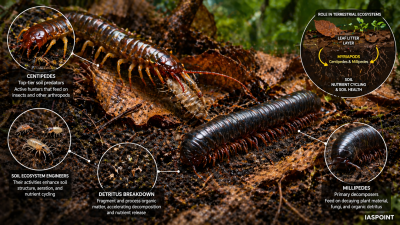
Myriapods, comprising centipedes and millipedes, are vital components of terrestrial ecosystems, particularly within the soil and leaf litter layers. Their ecological roles range from top-tier soil predators to primary decomposers.
Soil Formation and Nutrient Cycling
- The “Shredders” of the Forest: Millipedes (Diplopoda) are primary decomposers. They consume dead leaves and decaying plant matter, breaking them into smaller fragments. This mechanical breakdown increases the surface area for fungi and bacteria to further decompose the material.
- Humus Production: By processing organic debris, millipedes contribute significantly to the formation of humus, the organic component of soil that provides essential nutrients for plant growth.
- Soil Aeration: The burrowing activities of various myriapods improve soil structure, allowing air and water to reach plant roots more effectively, similar to the function of earthworms.
Regulation of Soil Food Webs
- Biological Pest Control: Centipedes (Chilopoda) are generalist predators. They feed on a wide variety of soil invertebrates, including insects, larvae, spiders, and even small snails. By doing so, they maintain the population balance of organisms that might otherwise become agricultural pests.
- Energy Transfer: Myriapods serve as a critical food source for higher trophic levels, including birds, amphibians, reptiles, and small mammals like shrews.
Economic Importance of Myriapods
While less commercially prominent than crustaceans, myriapods hold significant value in agriculture, medicine, and environmental monitoring.
Agriculture and Soil Health
- Natural Fertilization: Through the excretion of nutrient-rich fecal pellets (frass), millipedes return nitrogen, phosphorus, and potassium to the soil, reducing the dependency on chemical fertilizers in natural forest farming and silviculture.
- Composting: Certain millipede species are utilized in specialized composting systems to speed up the degradation of tough plant fibers like lignin and cellulose.
Medical and Biochemical Research
- Venom Pharmacology: Centipede venom contains a complex cocktail of neurotoxins, peptides, and enzymes. Researchers are studying these compounds for the development of new classes of non-opioid painkillers and treatments for cardiovascular diseases.
- Antimicrobial Properties: Some millipedes secrete defensive fluids (allomones) that possess potent antibacterial and antifungal properties. These chemicals are being investigated for potential use in developing new antibiotics to combat drug-resistant pathogens.
Environmental Indicators
- Bio-monitors: Myriapods are sensitive to soil pollution, especially heavy metal contamination (like lead and cadmium). Changes in their population density or physiological health serve as an early warning system for environmental degradation in a specific region.
Comparison of Ecological Roles
| Myriapod Class | Primary Ecological Role | Impact on Environment |
| Chilopoda (Centipedes) | Secondary/Tertiary Consumer | Controls pest populations through predation. |
| Diplopoda (Millipedes) | Detritivore / Decomposer | Recycles nutrients and facilitates soil formation. |
| Symphyla (Symphylans) | Herbivore / Decomposer | Can sometimes be minor pests to crop roots but aid in organic breakdown. |
Potential Economic Disadvantages
- Agricultural Pests: While generally beneficial, some species of Symphylans (garden centipedes) and certain millipedes can damage crops by feeding on germinating seeds and delicate root systems in greenhouse environments.
- Human Nuisance: Large centipedes (like Scolopendra) can deliver painful bites to humans. While rarely fatal, the venom causes localized swelling and intense pain, occasionally requiring medical intervention.
UPSC Trivia for Quick Revision
- Cryptobiosis: Unlike some other arthropods, myriapods generally cannot undergo cryptobiosis; they rely entirely on maintaining a high-moisture microhabitat due to their lack of a waxy, waterproof cuticle.
- Cyanide Defense: Some millipedes in the order Polydesmida can produce hydrogen cyanide gas as a defense mechanism. This is a rare example of an animal synthesizing a highly toxic inorganic compound for protection.
- Ancient Inhabitants: Fossil evidence suggests that myriapods were among the first animals to breathe air and live on land, with some extinct species like Arthropleura reaching lengths of over 2.5 meters.
- Maternal Care: Certain centipede species exhibit maternal care, where the female coils around her eggs to protect them from predators and fungi until they hatch—a relatively advanced behavior for soil arthropods.