

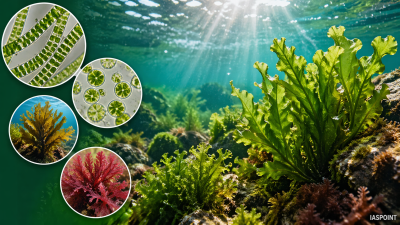
Algae are chlorophyll-bearing, simple, thalloid, autotrophic, and largely aquatic (both fresh water and marine) organisms. In the biological hierarchy, they belong to the Kingdom Plantae, though they lack true roots, stems, or leaves.
General Features
- Habitat: They occur in a variety of habitats: moist stones, soils, and wood. Some also occur in association with fungi (Lichen) and animals (e.g., on sloth bear).
- Structure: The size ranges from microscopic unicellular forms like Chlamydomonas to colonial forms like Volvox and filamentous forms like Ulothrix and Spirogyra. Marine forms such as Kelps form massive plant bodies.
- Nutrition: Strictly photoautotrophic; they contain chlorophyll a and other accessory pigments for photosynthesis.
- Cell Wall: Composed of cellulose, galactans, mannans, and minerals like calcium carbonate.
Classification of Algae
Algae are divided into three main classes based on their primary pigment and stored food materials.
| Class | Common Name | Major Pigments | Stored Food | Cell Wall |
| Chlorophyceae | Green Algae | Chlorophyll a, b | Starch | Cellulose |
| Phaeophyceae | Brown Algae | Chlorophyll a, c, Fucoxanthin | Mannitol, Laminarin | Cellulose and Algin |
| Rhodophyceae | Red Algae | Chlorophyll a, d, Phycoerythrin | Floridean Starch | Cellulose, Pectin, Polysulphate esters |
1. Chlorophyceae (Green Algae)
- The plant body may be unicellular, colonial, or filamentous.
- Chloroplasts may be discoid, plate-like, reticulate, cup-shaped, spiral, or ribbon-shaped in different species.
- Most members have one or more storage bodies called pyrenoids located in the chloroplasts. Pyrenoids contain protein besides starch.
- Examples: Chlamydomonas, Volvox, Ulothrix, Spirogyra, and Chara.
2. Phaeophyceae (Brown Algae)
- Found primarily in marine habitats. They show great variation in size and form.
- They possess chlorophyll a, c, carotenoids, and xanthophylls. They vary in color from olive green to shades of brown depending upon the amount of the xanthophyll pigment, fucoxanthin.
- The plant body is usually attached to the substratum by a holdfast, and has a stalk, the stipe, and leaf-like photosynthetic organ, the frond.
- Examples: Ectocarpus, Dictyota, Laminaria, Sargassum, and Fucus.
3. Rhodophyceae (Red Algae)
- Predominantly marine with greater concentrations found in the warmer areas. They occur in both well-lighted regions close to the surface and at great depths in oceans where relatively little light penetrates.
- The red color is due to the predominance of the red pigment, r-phycoerythrin.
- The food is stored as floridean starch which is very similar to amylopectin and glycogen in structure.
- Examples: Polysiphonia, Porphyra, Gracilaria, and Gelidium.
Life Cycles in Algae
Algae exhibit three distinct types of life cycles, involving the alternation of generations between a haploid gametophyte and a diploid sporophyte.
1. Haplontic Life Cycle
- The dominant, free-living phase is the haploid gametophyte.
- The diploid stage is represented only by the single-celled zygote. There are no free-living sporophytes.
- Meiosis in the zygote results in the formation of haploid spores.
- Examples: Volvox, Spirogyra, and Chlamydomonas.
2. Diplontic Life Cycle
- The diploid sporophyte is the dominant, photosynthetic, independent phase of the plant.
- The gametophytic phase is represented by the single to few-celled haploid gametes.
- Example: Fucus (a brown alga).
3. Haplo-diplontic Life Cycle
- Both phases are multicellular and often free-living. They differ in their dominant phases.
- Examples: Ectocarpus, Polysiphonia, and Kelps.
Economic Importance of Algae
Algae play a critical role in the environment and human industry, a common theme in UPSC Prelims.
Ecological Significance
- Carbon Fixation: At least half of the total carbon dioxide fixation on earth is carried out by algae through photosynthesis.
- Primary Producers: They are the primary producers of energy-rich compounds which form the basis of the food cycles of all aquatic animals.
- Oxygen Production: They increase the level of dissolved oxygen in their immediate environment.
Commercial Products
- Hydrocolloids: Certain marine brown and red algae produce large amounts of water-holding substances. Algin (brown algae) and Carrageen (red algae) are used commercially.
- Agar: Obtained from Gelidium and Gracilaria, it is used to grow microbes and in preparations of ice-creams and jellies.
- Food Supplements: Chlorella and Spirulina are unicellular algae rich in proteins and are used as food supplements even by space travelers.
- Edible Species: Many species of Porphyra, Laminaria, and Sargassum are among the 70 species of marine algae used as food.
Quick Facts for UPSC Prelims
- Iodine Source: Laminaria and Fucus are significant sources of iodine.
- Space Algae: Chlorella is often called “Space Algae” due to its use in oxygen regeneration and food supply in space missions.
- Water Blooms: Excessive growth of algae (especially blue-green algae, though classified as Cyanobacteria) in nutrient-rich water bodies leads to Eutrophication and oxygen depletion.
- Non-Motile Gametes: Red algae are unique as they do not produce motile (flagellated) stages in their life cycle.