

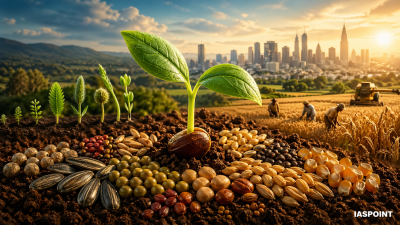
Seeds represent the pinnacle of plant evolution and are the cornerstone of human civilization.
Foundation of Global Food Security
Approximately 70% of the human diet consists of seeds or products derived directly from them.
- Cereal Grains: Seeds of the Poaceae family (Rice, Wheat, Maize, Millets) provide the bulk of global caloric intake. These are technically caryopsis fruits where the seed and fruit wall are fused.
- Pulses and Legumes: Seeds of the Fabaceae family (Gram, Pea, Lentils, Soybean) are the primary source of vegetable protein, particularly vital in the Indian dietary context.
- Oilseeds: A significant portion of vegetable oils is extracted from seeds.
- Groundnut, Mustard, Sunflower: Primary sources of cooking oil.
- Castor and Linseed: Used in industrial lubricants and paints.
Industrial and Commercial Applications
Beyond nutrition, seeds serve as essential raw materials for non-food industries.
- Textile Industry: Cotton “fiber” is actually the surface outgrowth (trichomes) of the cotton seed coat. The seeds themselves (cottonseed) are processed for oil and cattle feed.
- Beverage Industry: * Coffee: Produced from the roasted seeds of Coffea arabica.
- Cocoa: Derived from the seeds of Theobroma cacao, the base for the global chocolate industry.
- Spices: Many common spices are seeds, such as Cumin (Jeera), Coriander (Dhania), Fennel (Saunf), and Fenugreek (Methi).
Seeds in Medicine and Biotechnology
The chemical composition of seeds includes alkaloids and steroids used in pharmaceuticals.
- Nux-vomica: Seeds of Strychnos nux-vomica are a source of strychnine, used in small doses as a stimulant.
- Stramonium: Seeds of Datura species contain alkaloids used in treating asthma.
- Seed Technology: The development of High Yielding Varieties (HYV) during the Green Revolution was centered on seed genetics. Modern biotechnology focuses on Genetically Modified (GM) Seeds (e.g., Bt Cotton) to incorporate pest resistance and drought tolerance.
The Seed Industry and Intellectual Property
Seeds are a major economic commodity in international trade, governed by specific legal frameworks.
| Concept | Economic Relevance |
| Hybrid Seeds | Produced by crossing two different varieties to achieve “Hybrid Vigour” (Heterosis); farmers must purchase new seeds every season. |
| Seed Replacement Ratio (SRR) | The percentage of area sown with certified seeds compared to farm-saved seeds. High SRR is a goal for increasing Indian agricultural productivity. |
| PPV&FR Act, 2001 | Protection of Plant Varieties and Farmers’ Rights Act; India’s unique law that protects both breeders’ and farmers’ rights over seeds. |
Post-Harvest and Storage Economics
The ability of seeds to undergo dehydration and enter a state of dormancy is what makes them economically superior to other plant parts.
- Long-term Storage: Unlike fruits or tubers, seeds can be stored for years with minimal spoilage, allowing for the creation of “Buffer Stocks” to stabilize food prices.
- Seed Processing: Cleaning, grading, and treating seeds with fungicides (Seed Dressing) is a multi-billion dollar service industry.
UPSC Prelims Trivia: Economic Botany of Seeds
- Quinoa: Often called a “pseudocereal,” it is a seed that contains all nine essential amino acids, making it a “superfood” in global exports.
- Biodiesel: Seeds of Jatropha curcas and Pongamia pinnata (Karanj) are being promoted in India for the production of eco-friendly biofuel.
- The “Nut” in Coffee: A coffee bean is not a bean or a nut; it is the seed of a drupe (the coffee cherry).
- Seed Certification: In India, “Blue Tags” on seed packets indicate Certified Seeds, while “White Tags” indicate Foundation Seeds, a fact often tested in agricultural exams.