

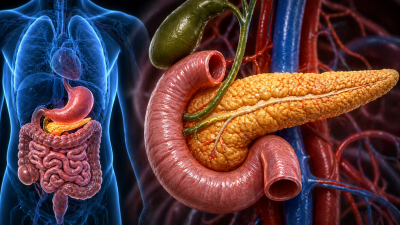
The pancreas is a compound (heterocrine) elongated organ situated between the limbs of the ‘C’ shaped duodenum. It is unique because it functions as both an exocrine and an endocrine gland. In the context of the digestive system, its exocrine function is paramount, as it secretes the most potent suite of digestive enzymes.
Dual Functional Nature
The pancreas is composed of two distinct types of tissues that perform different roles:
- Exocrine Portion (Acini): Consists of rounded lobules called acini that secrete an alkaline pancreatic juice containing enzymes. This constitutes about 99% of the pancreatic mass.
- Endocrine Portion (Islets of Langerhans): Consists of groups of cells that secrete hormones directly into the blood.
- Alpha cells: Secrete Glucagon (increases blood sugar).
- Beta cells: Secrete Insulin (decreases blood sugar).
- Delta cells: Secrete Somatostatin (inhibits growth hormone and digestive secretions).
Pancreatic Juice: The “Complete” Digestive Juice
Pancreatic juice is considered the most important digestive secretion because it contains enzymes capable of digesting all major categories of food (carbohydrates, proteins, and fats).
1. Physical Properties
- pH: Highly alkaline (approx. 7.8 to 8.4).
- Composition: Rich in bicarbonates, which neutralize the acidic chyme entering from the stomach and provide the optimal pH for intestinal enzymes.
2. Enzyme Composition and Action
Pancreatic enzymes are secreted in inactive forms (proenzymes) to prevent the organ from digesting itself.
| Enzyme (Inactive) | Activation Factor | Active Form | Substrate/Action |
| Trypsinogen | Enterokinase (from intestine) | Trypsin | Breaks proteins into peptides. |
| Chymotrypsinogen | Trypsin | Chymotrypsin | Digests proteins and milk proteins. |
| Procarboxypeptidase | Trypsin | Carboxypeptidase | Cleaves amino acids from peptides. |
| Pancreatic Amylase | Alkaline medium | Amylopsin | Converts polysaccharides into disaccharides. |
| Pancreatic Lipases | Bile Salts | Steapsin | Principal enzyme for fat digestion. |
| Nucleases | Alkaline medium | DNase / RNase | Digests nucleic acids into nucleotides. |
Regulation of Secretion
The secretion of pancreatic juice is controlled by both nervous and hormonal signals:
- Secretin: Produced by the duodenal mucosa in response to acid; it stimulates the pancreas to release a juice rich in water and bicarbonates.
- Cholecystokinin (CCK): Produced by the duodenal mucosa in response to fats and proteins; it stimulates the secretion of pancreatic enzymes.
The Duct System
The pancreatic secretions travel through the Main Pancreatic Duct (Duct of Wirsung), which joins the common bile duct to form the Hepatopancreatic Ampulla (Ampulla of Vater). This ampulla opens into the duodenum and is guarded by the Sphincter of Oddi.
UPSC Prelims Fact File
- Complete Digestive Juice: Pancreatic juice is the only secretion that can digest all three types of food (Carbs, Proteins, Fats).
- Enterokinase: This is not a digestive enzyme itself but an “activator” enzyme secreted by the intestinal mucosa; without it, protein digestion in the intestine would stall.
- Steapsin: Another name for pancreatic lipase, it is the most powerful lipase in the human body.
- Pancreatitis: Inflammation of the pancreas, often caused by gallstones blocking the common duct or chronic alcohol consumption.
- Cystic Fibrosis: A genetic disorder that can cause the pancreatic ducts to become blocked with thick mucus, leading to severe malabsorption of nutrients.
Summary Table: Pancreatic Enzymes in Action
| Substrate | Enzyme | Product |
| Proteins/Peptones | Trypsin/Chymotrypsin | Dipeptides |
| Polysaccharides (Starch) | Pancreatic Amylase | Disaccharides (Maltose) |
| Fats (Emulsified) | Lipases | Diglycerides → Monoglycerides |
| Nucleic Acids | Nucleases | Nucleotides |