

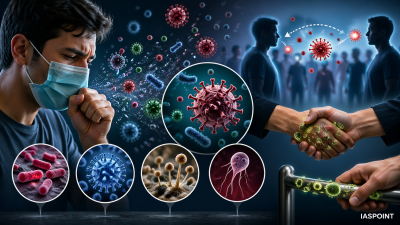
Infectious diseases, also known as communicable diseases, are caused by pathogenic microorganisms such as bacteria, viruses, fungi, or parasites. These diseases can be spread directly or indirectly from one person to another.
Classification by Pathogenic Agents
Bacterial Diseases
Bacterial infections occur when harmful bacteria enter the body, multiply, and interfere with physiological processes. Many are treatable with antibiotics, though antimicrobial resistance (AMR) is a rising concern.
- Tuberculosis (TB): Caused by Mycobacterium tuberculosis. Primarily affects the lungs (pulmonary TB) but can affect other organs. India has the highest TB burden globally.
- Cholera: An acute diarrheal infection caused by ingestion of food or water contaminated with the bacterium Vibrio cholerae.
- Typhoid: Caused by Salmonella typhi bacteria; spread through contaminated food and water.
- Pertussis (Whooping Cough): Caused by Bordetella pertussis; a highly contagious respiratory tract infection.
- Anthrax: Caused by Bacillus anthracis; primarily a zoonotic disease affecting herbivores, but transmissible to humans.
Viral Diseases
Viruses are microscopic organisms that require a living host to replicate. Unlike bacteria, viral infections do not respond to antibiotics.
- Hepatitis: Inflammation of the liver. Types include A and E (waterborne), and B, C, and D (blood-borne/fluid-borne).
- Dengue: Transmitted by the Aedes aegypti mosquito. Caused by the Dengue virus (DENV, 1–4 serotypes).
- Japanese Encephalitis (JE): A leading cause of viral encephalitis in Asia, transmitted by Culex mosquitoes.
- Measles and Rubella: Highly contagious viral diseases; India aims for their elimination through the MR vaccine.
- HIV/AIDS: Caused by the Human Immunodeficiency Virus, which attacks the body’s immune system, specifically CD4 cells.
Protozoan and Parasitic Diseases
These diseases are caused by single-celled organisms (protozoa) or multicellular organisms (helminths).
- Malaria: Caused by Plasmodium parasites and transmitted through the bite of infected female Anopheles mosquitoes.
- Kala-azar (Visceral Leishmaniasis): Caused by Leishmania parasites and transmitted by the bite of infected female sandflies.
- Amoebiasis: Caused by Entamoeba histolytica; results in intestinal infection and dysentery.
Comparison Table of Major Infectious Diseases
| Disease | Pathogen Type | Causative Agent | Primary Vector/Mode |
| Tetanus | Bacteria | Clostridium tetani | Contaminated wounds/soil |
| Diphtheria | Bacteria | Corynebacterium diphtheriae | Respiratory droplets |
| Zika Virus | Virus | Zika Virus | Aedes mosquito |
| Chikungunya | Virus | Chikungunya Virus | Aedes mosquito |
| Ebola | Virus | Ebola Virus | Direct contact with body fluids |
| Filariasis | Parasite | Wuchereria bancrofti | Culex mosquito |
| Syphilis | Bacteria | Treponema pallidum | Sexual contact |
Transmission Dynamics
Vector-Borne Diseases
Vectors are living organisms that can transmit infectious pathogens between humans, or from animals to humans.
- Mosquitoes: Responsible for Malaria (Anopheles), Dengue/Zika/Yellow Fever (Aedes), and Lymphatic Filariasis (Culex).
- Sandflies: Responsible for Leishmaniasis (Kala-azar).
- Ticks: Responsible for Kyasanur Forest Disease (KFD) or “Monkey Fever” in India.
Waterborne and Foodborne Diseases
These result from the ingestion of contaminated water or food.
- Common examples: Diarrhea, Hepatitis A, Polio, and Typhoid.
- Mechanism: Often follows the fecal-oral route in areas with poor sanitation.
Important Facts and Trivia for Prelims
- Zoonotic Diseases: These are diseases that jump from animals to humans. Examples include Rabies, Nipah virus, COVID-19, and Brucellosis. Approximately 60% of known infectious diseases in people are zoonotic.
- Neglected Tropical Diseases (NTDs): A group of infections (like Kala-azar, Lymphatic Filariasis, and Leprosy) that are most common in tropical regions where water safety, sanitation, and access to health care are substandard.
- Incubation Period: The time elapsed between exposure to a pathogenic organism and when symptoms and signs are first apparent.
- Eradication vs. Elimination: Eradication refers to the permanent reduction to zero of the worldwide incidence of an infection (e.g., Smallpox). Elimination refers to the reduction to zero of the incidence of a specified disease in a defined geographical area (e.g., Polio in India).
Government Initiatives in India
- Mission Indradhanush: Launched to expand immunization coverage to all children and pregnant women. It targets 12 vaccine-preventable diseases.
- National Strategic Plan for TB Elimination: Aims to end TB in India by 2025, five years ahead of the Global Sustainable Development Goal (SDG) target of 2030.
- National Vector Borne Disease Control Programme (NVBDCP): The central nodal agency for the prevention and control of six vector-borne diseases: Malaria, Dengue, Lymphatic Filariasis, Kala-azar, Japanese Encephalitis, and Chikungunya.
- Integrated Disease Surveillance Programme (IDSP): A decentralized, state-based surveillance program intended to detect and respond to disease outbreaks quickly.