

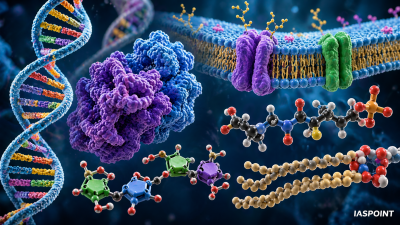
Biomolecules are organic compounds that form the structural and functional basis of living organisms. They are primarily composed of carbon, hydrogen, oxygen, nitrogen, phosphorus, and sulfur.
Chemical Composition of Living Organisms
The elemental composition of living tissues differs from non-living matter in the relative abundance of carbon and hydrogen.
- Elemental Analysis: If a living tissue is burnt, the carbon compounds are oxidized to gaseous form (CO2), and the remaining “ash” contains inorganic elements like Calcium, Magnesium, and Potassium.
- Biomacromolecules vs. Micromolecules: Based on molecular weight and solubility in trichloroacetic acid:
- Acid-soluble pool: Contains molecules with molecular weights ranging from 18 to 800 Daltons (Da). These are called biomicromolecules (e.g., amino acids, sugars, nucleotides).
- Acid-insoluble fraction: Contains molecules with molecular weights exceeding 10,000 Da. These are biomacromolecules (e.g., proteins, nucleic acids, polysaccharides).
- Note on Lipids: Lipids have molecular weights not exceeding 800 Da, but they appear in the insoluble fraction because they form vesicles during tissue homogenization. Thus, lipids are not strictly macromolecules.
Carbohydrates: The Energy Reservoirs
Carbohydrates are polyhydroxy aldehydes or ketones. They are the primary source of energy and structural components in plants and animals.
Classification of Carbohydrates
| Category | Description | Examples |
| Monosaccharides | Simplest units; cannot be hydrolyzed further. | Glucose (Blood sugar), Fructose (Fruit sugar), Galactose. |
| Oligosaccharides | Consist of 2 to 10 monosaccharide units. | Sucrose (Glucose+Fructose), Lactose (Glucose+Galactose). |
| Polysaccharides | Long chains of monosaccharides linked by glycosidic bonds. | Starch, Glycogen, Cellulose, Chitin. |
Key Functional Facts
- Starch: The primary storage polysaccharide in plants. It forms helical secondary structures and can hold I2 molecules (giving a blue color).
- Glycogen: Known as “Animal Starch,” stored in the liver and muscles.
- Cellulose: A homopolymer of glucose; it is the most abundant organic compound in the biosphere. It lacks helical structure and cannot hold I2.
- Chitin: A complex polysaccharide found in the exoskeletons of arthropods and fungal cell walls (contains nitrogen).
Proteins: The Building Blocks of Life
Proteins are heteropolymers of amino acids linked by peptide bonds. They are never homopolymers.
Amino Acids
There are 20 types of amino acids involved in protein synthesis.
- Essential Amino Acids: Cannot be synthesized by the body; must be obtained through diet (e.g., Leucine, Lysine).
- Non-essential Amino Acids: Synthesized by the body (e.g., Alanine, Serine).
- Zwitterion: At specific pH levels, amino acids carry both positive and negative charges simultaneously.
Protein Structures
- Primary: The linear sequence of amino acids.
- Secondary: Folding into α-helix or β-pleated sheets (e.g., Keratin).
- Tertiary: Long protein chain folded upon itself like a hollow woolen ball; necessary for biological activity (e.g., Enzymes).
- Quaternary: Architecture of a protein with multiple subunits (e.g., Hemoglobin, which has 4 subunits—2 alpha and 2 beta).
Important Proteins and Functions
- Collagen: The most abundant protein in the animal world.
- RuBisCO: (Ribulose bisphosphate Carboxylase-Oxygenase) The most abundant protein in the whole biosphere.
- Insulin: A peptide hormone regulating blood glucose.
- Antibodies: Fight infectious agents.
- GLUT-4: Enables glucose transport into cells.
Lipids: Fats and Derivatives
Lipids are generally water-insoluble. They include fatty acids, glycerol, and complex lipids.
- Fatty Acids: Classified as Saturated (no double bonds, e.g., Palmitic acid) or Unsaturated (one or more double bonds, e.g., Arachidonic acid).
- Glycerides: Fatty acids esterified with glycerol. They are categorized as monoglycerides, diglycerides, and triglycerides.
- Phospholipids: Found in cell membranes (e.g., Lecithin).
- Steroids: Derived lipids like Cholesterol, which act as precursors for hormones like testosterone and estrogen.
Nucleic Acids: The Genetic Material
Nucleic acids are polymers of nucleotides. Each nucleotide has three components: a heterocyclic compound (nitrogenous base), a monosaccharide (pentose sugar), and phosphoric acid.
Nitrogenous Bases
- Purines: Adenine (A) and Guanine (G).
- Pyrimidines: Cytosine (C), Thymine (T), and Uracil (U).
- Note: DNA contains A, G, C, and T. RNA contains A, G, C, and U instead of Thymine.
Sugar Types
- Ribose: Found in RNA (Ribonucleic Acid).
- 2-deoxyribose: Found in DNA (Deoxyribonucleic Acid).
Enzymes: Biological Catalysts
Almost all enzymes are proteins (exceptions include Ribozymes, which are nucleic acids).
Mechanism of Action
Enzymes lower the “Activation Energy” required for a reaction to proceed. They possess an “Active Site” where the substrate binds to form an Enzyme-Substrate (ES) complex.
Factors Affecting Enzyme Activity
- Temperature and pH: Enzymes show maximum activity at “optimum” levels. High temperatures denature proteins, destroying enzymatic activity.
- Inhibitors: Chemicals that shut off enzyme activity. “Competitive inhibitors” closely resemble the substrate (e.g., Malonate inhibiting succinic dehydrogenase).
Primary and Secondary Metabolites
- Primary Metabolites: Involved in physiological processes (e.g., sugars, amino acids).
- Secondary Metabolites: Produced by plants, fungi, and microbes; often have ecological or economic importance but no direct role in primary metabolism.
| Type | Examples |
| Alkaloids | Morphine, Codeine. |
| Terpenoids | Monoterpenes, Diterpenes. |
| Essential Oils | Lemon grass oil. |
| Toxins | Abrin, Ricin. |
| Lectins | Concanavalin A. |
| Drugs | Vinblastine (anti-cancer), Curcumin. |
| Polymeric substances | Rubber, Gums, Cellulose. |