

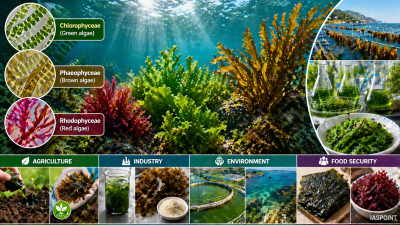
Algae are chlorophyll-bearing, simple, thalloid, autotrophic, and largely aquatic (both fresh water and marine) organisms. In the context of the UPSC Prelims, their economic importance spans across agriculture, industry, environment, and food security. They belong to the kingdom Plantae and are categorized primarily into Chlorophyceae (Green algae), Phaeophyceae (Brown algae), and Rhodophyceae (Red algae).
Role in Global Carbon Fixation and Oxygen Production
Algae are the primary producers of energy-rich compounds which form the basis of the food cycles of all aquatic animals.
- Carbon Sequestration: At least half of the total carbon dioxide fixation on earth is carried out by algae through photosynthesis.
- Oxygen Enrichment: As photosynthetic organisms, they increase the level of dissolved oxygen in their immediate environment, which is vital for aquatic life.
Algae as a Direct Food Source
Many species of marine algae are used as food, particularly in coastal regions of East Asia.
- Key Species: Among the 70 species of marine algae used as food, Porphyra, Laminaria, and Sargassum are the most prominent.
- Nutritional Value: Algae are rich in vitamins (A, B, C, and E), minerals (Iodine, Potassium), and proteins.
- Single Cell Protein (SCP): Chlorella (a unicellular green alga) and Spirulina are exceptionally rich in proteins and are used as food supplements, even by space travelers.
Industrial Applications: Hydrocolloids and Gels
Certain marine brown and red algae produce large amounts of hydrocolloids (water-holding substances).
- Agar-Agar: Obtained from Gelidium and Gracilaria, it is used to grow microbes in laboratories and in the preparation of ice creams and jellies.
- Algin: A hydrocolloid extracted from Brown algae (Phaeophyceae), used extensively in the food and textile industries as a thickening agent.
- Carrageen: Extracted from Red algae (Rhodophyceae), it is used as a stabilizer in dairy products like chocolate milk and yogurt.
Agricultural Significance and Bio-fertilizers
Algae play a crucial role in maintaining soil fertility and enhancing crop yields.
- Nitrogen Fixation: Blue-green algae (Cyanobacteria) such as Anabaena and Nostoc fix atmospheric nitrogen in the soil, reducing the need for chemical fertilizers.
- Soil Reclamation: Algae help in the reclamation of alkaline soils by reducing pH levels and increasing organic matter.
- Growth Hormones: Some seaweed extracts contain auxins and cytokinins that promote plant growth.
Comparative Classification of Economically Important Algae
| Class | Common Name | Major Pigments | Stored Food | Cell Wall | Economic Use |
| Chlorophyceae | Green Algae | Chlorophyll a, b | Starch | Cellulose | Food supplements (Chlorella) |
| Phaeophyceae | Brown Algae | Chlorophyll a, c, Fucoxanthin | Mannitol, Laminarin | Cellulose and Algin | Iodine source, Algin production |
| Rhodophyceae | Red Algae | Chlorophyll a, d, Phycoerythrin | Floridean Starch | Cellulose, Pectin | Agar production (Gelidium) |
Pharmaceutical and Medicinal Importance
Algae are sources of various bioactive compounds used in modern medicine.
- Antibiotics: Chlorellin, an antibiotic obtained from Chlorella, is effective against several pathogenic bacteria.
- Iodine Source: Brown algae like Laminaria and Fucus are the richest natural sources of iodine, used to treat goiter.
- Larvicides: Certain algae are used in water bodies to control mosquito larvae, aiding in the prevention of malaria and dengue.
Biofuel and Environmental Remediation
Algae are considered the “Third Generation Biofuel” source.
- Bio-fuel Production: Algae can produce lipids that are converted into biodiesel. They grow faster than land crops and do not compete for arable land.
- Sewage Treatment: Algae are used in aerobic sewage treatment plants to provide oxygen for the bacterial decomposition of organic waste.
Key Facts and Trivia for UPSC Prelims
- Kelp Forest: Large brown algae (Kelps) can reach heights of 100 meters and provide a vital habitat for marine biodiversity.
- Diatomaceous Earth: Diatoms (a group of algae) have silica in their cell walls. Their deposits form “Diatomaceous Earth,” used in polishing, filtration of oils, and syrups.
- Space Research: Chlorella is often called the “Space Alga” because it can recycle carbon dioxide into oxygen and provide protein-rich food in closed systems.
- Iodine Extraction: Historically, the “burning of kelp” was the primary method for industrial iodine production.