

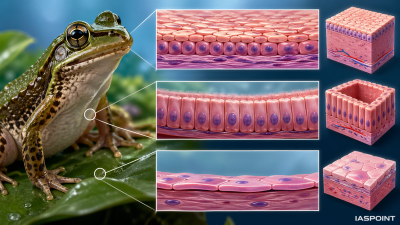
Epithelial tissue, or epithelium, serves as the primary protective interface between an animal’s body and its environment. It consists of tightly packed cells with minimal intercellular space, resting on a non-cellular basement membrane. In the animal kingdom, this tissue is unique because it can originate from all three germ layers: ectoderm (skin epidermis), mesoderm (coelomic lining), and endoderm (gut lining).
Classification by Cell Layer and Shape
Epithelial tissues in animals are classified primarily by the number of cell layers and the morphology of the constituent cells.
Simple Epithelium (Single Layer)
Common in animals where rapid diffusion, absorption, or secretion is required.
- Simple Squamous: Extremely thin, scale-like cells. Found in the alveoli of reptilian lungs, the Bowman’s capsule in fish kidneys, and the lining of blood vessels (endothelium).
- Simple Cuboidal: Cube-shaped cells involved in secretion. Found in the salivary glands of insects and the thyroid follicles of birds.
- Simple Columnar: Tall cells specialized for absorption. These line the stomach and intestines of all vertebrates. In many invertebrates, these cells possess microvilli to increase surface area for nutrient uptake.
- Ciliated Epithelium: Columnar or cuboidal cells with hair-like cilia. Essential in the oviducts of amphibians to move eggs and the respiratory tract of land-dwelling vertebrates to expel debris.
Compound/Stratified Epithelium (Multiple Layers)
Designed to withstand mechanical wear and tear.
- Stratified Squamous: Found in the skin of vertebrates. In terrestrial animals like reptiles, the outer layers are keratinized (filled with keratin protein) to prevent desiccation. In aquatic animals like fish, the skin is usually non-keratinized and remains moist.
- Transitional Epithelium: A specialized stratified epithelium that can stretch. It is found in the urinary bladder of mammals and certain reptiles, allowing the organ to expand as it fills.
Specialized Functional Adaptations in Animals
The diversity of the animal kingdom has led to unique epithelial modifications suited for specific survival strategies.
| Specialized Epithelium | Location / Animal Group | Key Biological Function |
| Glandular Epithelium | Silk glands (Spiders), Venom glands (Snakes) | Synthesis and secretion of specialized chemical substances. |
| Sensory Epithelium | Olfactory epithelium (Shark snouts), Taste buds | Contains neurosensory cells to detect environmental stimuli. |
| Pigmented Epithelium | Retina of the eye (Cephalopods/Vertebrates) | Contains melanin to absorb light and prevent internal reflection. |
| Germinal Epithelium | Gonads (Testes/Ovaries) | Production of gametes (sperm and ova) through meiosis. |
Key Anatomical Structures: Non-Human Examples
- Tegument in Platyhelminthes: Parasitic flatworms like tapeworms have a specialized “syncytial” epithelium called a tegument. It lacks individual cell boundaries and protects the worm from the host’s digestive enzymes while absorbing nutrients directly.
- Mantle in Mollusks: The mantle is a fold of epithelial tissue in mollusks (snails, clams) that secretes the calcium carbonate shell.
- Cuticle Secretion: In Arthropods and Nematodes, the underlying epithelial layer (hypodermis) secretes a non-living, tough outer cuticle made of chitin or collagen, which must be shed during molting (ecdysis).
Comparative Facts for UPSC Prelims
- Basement Membrane: A universal feature of epithelial tissue across the animal kingdom; it provides structural support and acts as a selective filter. It is non-living and composed of mucopolysaccharides and fibers.
- Avascular Nature: Epithelial tissues are avascular, meaning they lack their own blood supply. Nutrients are received via diffusion from the underlying connective tissue through the basement membrane.
- Rapid Regeneration: Epithelial cells have a high power of division. This is why the skin of a lizard or the lining of a bird’s gut heals significantly faster than deeper muscle or nerve tissues.
- Cell Junctions: Animal epithelial cells stay connected through specialized structures like Tight Junctions (prevent leakage), Adhering Junctions (cementing cells together), and Gap Junctions (allowing communication between cells). These are highly developed in the cardiac and intestinal tissues of vertebrates.
Trivia on Animal Epithelium
- Bioluminescence: In many deep-sea fish and squids, specialized epithelial cells called photocytes are responsible for producing light through chemical reactions.
- Electric Organs: In electric eels, modified epithelial and muscular tissues form “electrocytes” that can generate high-voltage shocks for defense and hunting.
- Uropygial Gland: Birds possess a specialized epithelial gland at the base of their tail that secretes oil for preening and waterproofing feathers.