

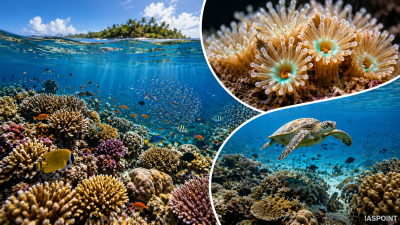
Coral reefs are underwater ecosystems characterized by reef-building corals. Though they cover less than 1% of the ocean floor, they support approximately 25% of all marine species. In the context of Phylum Cnidaria, corals are primary examples of the Anthozoa class, existing exclusively in the polyp form.
Biological Composition of Corals
Corals are symbiotic systems involving a marine invertebrate and a photosynthetic powerhouse.
- The Animal (Coral Polyp): Tiny, soft-bodied organisms related to sea anemones. They secrete a hard exoskeleton of calcium carbonate (CaCO3).
- The Symbiont (Zooxanthellae): Microscopic algae (dinoflagellates) that live within the coral tissues.
- Symbiotic Relationship: This is a mutualistic relationship. The zooxanthellae provide the coral with glucose and oxygen via photosynthesis, while the coral provides the algae with a protected environment and the compounds needed for photosynthesis (carbon dioxide and nitrogenous waste).
Ideal Conditions for Coral Growth
Corals are highly sensitive to environmental changes, making them excellent indicators of ocean health.
- Temperature: Warm waters ranging between 20°C and 28°C.
- Depth/Light: Shallow waters (typically less than 50 meters) are required so that zooxanthellae can receive sufficient sunlight for photosynthesis.
- Salinity: Stable marine salinity (approx. 27–40 parts per thousand). They do not grow well near river mouths where freshwater dilution occurs.
- Sedimentation: Clear, sediment-free water is essential; silt can smother polyps and block sunlight.
Classification of Coral Reefs
Based on their formation and relationship with the landmass, reefs are classified into three primary types:
| Reef Type | Description |
| Fringing Reefs | Reefs that grow directly from the shore of a continent or island. They are the most common type. |
| Barrier Reefs | Separated from the coast by a deep lagoon. The Great Barrier Reef in Australia is the largest example. |
| Atolls | Circular or horse-shoe shaped reefs surrounding a central lagoon; they typically form around submerged volcanic islands. |
Ecological Importance
- Biodiversity Hotspots: Often called the “Rainforests of the Sea” due to the immense variety of life they support.
- Coastal Protection: Reefs act as natural breakwaters, absorbing wave energy and protecting shorelines from erosion, storm surges, and tsunamis.
- Carbon Sink: They play a role in the global carbon cycle by sequestering carbon in the form of calcium carbonate skeletons.
Economic Importance
- Fisheries: Provide a vital source of protein and income for millions of people globally.
- Tourism: Generate billions in revenue for coastal economies (e.g., Lakshadweep, Andaman & Nicobar Islands).
- Bioprospecting: Corals are sources of unique chemical compounds used in treating cancers, HIV, and cardiovascular diseases. Coral bone grafts are also used in orthopedic surgery.
Threats to Coral Ecosystems
- Coral Bleaching: Occurs when corals are stressed (primarily by rising sea temperatures). They expel their zooxanthellae, turning white. If the stress continues, the coral dies.
- Ocean Acidification: Increased CO2 absorption by oceans lowers pH levels, making it difficult for corals to secrete calcium carbonate skeletons.
- Anthropogenic Factors: Overfishing, destructive fishing (cyanide/dynamite), plastic pollution, and nutrient runoff (causing algal blooms).
Distribution of Coral Reefs in India
India possesses significant reef areas, primarily managed under the Ministry of Environment, Forest and Climate Change.
- Andaman and Nicobar Islands: Largest reef area in India; predominantly fringing reefs.
- Lakshadweep Islands: Consists entirely of Atolls.
- Gulf of Mannar: Rich biodiversity; declared a Biosphere Reserve.
- Gulf of Kachchh: Notable for having corals that can withstand high temperature fluctuations and high turbidity.
Facts for UPSC Prelims
- Great Barrier Reef: The world’s largest coral reef system, located in the Coral Sea, off the coast of Queensland, Australia.
- Coral Triangle: A marine area in the western Pacific Ocean (including Indonesia, Philippines, Papua New Guinea) containing the highest coral diversity in the world.
- Schedule I Status: In India, corals are protected under Schedule I of the Wildlife Protection Act, 1972, granting them the highest level of legal protection.
- Zooxanthellae Pigments: The vibrant colors of coral reefs are actually provided by the pigments in the zooxanthellae, not the coral animal itself.