

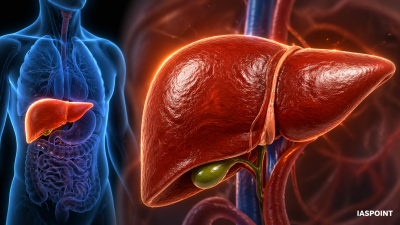
The liver is the largest gland of the human body, weighing approximately 1.2 to 1.5 kg in an adult human. Situated in the abdominal cavity, just below the diaphragm, it has two main lobes (right and left). It is a vital metabolic organ that performs over 500 functions, including detoxification, protein synthesis, and the production of biochemicals necessary for digestion.
Structural and Functional Unit: Hepatic Lobules
The hepatic lobules are the structural and functional units of the liver.
- Hepatic Cells (Hepatocytes): These cells are arranged in the form of cords within the lobules.
- Glisson’s Capsule: Each lobule is covered by a thin connective tissue sheath called the Glisson’s capsule, a characteristic feature of mammalian livers.
- Kupffer Cells: Specialized macrophages located in the liver that ingest red blood cells, bacteria, and foreign particles, acting as a critical part of the immune system.
The Biliary System
The liver produces bile, which is essential for fat digestion. The flow of bile follows a specific ductal pathway:
- Hepatic Ducts: Bile secreted by the hepatic cells passes through these ducts.
- Gallbladder: A thin muscular sac where bile is stored and concentrated.
- Cystic Duct: The duct arising from the gallbladder.
- Common Bile Duct: Formed by the union of the cystic duct and the hepatic duct.
- Hepatopancreatic Duct: The common bile duct and the pancreatic duct open together into the duodenum. This is guarded by the Sphincter of Oddi.
Composition and Role of Bile
Bile is a yellowish-green alkaline fluid. Crucially, bile contains no enzymes, yet it is indispensable for digestion.
| Component | Function/Significance |
| Bile Pigments | Bilirubin and Biliverdin (derived from broken-down RBCs). |
| Bile Salts | Sodium glycocholate and Sodium taurocholate; essential for emulsification. |
| Cholesterol & Phospholipids | Structural components and waste products. |
| Bicarbonates | Neutralizes the acidity of chyme from the stomach. |
- Emulsification of Fats: Bile salts break down large fat globules into very small micelles, increasing the surface area for the action of lipase.
- Activation of Lipase: Bile provides the alkaline medium necessary to activate pancreatic lipases.
Major Metabolic Functions of the Liver
Beyond digestion, the liver acts as the body’s primary “chemical factory”:
- Glycogenesis: Conversion of excess glucose into glycogen for storage (stimulated by insulin).
- Glycogenolysis: Breakdown of glycogen into glucose when blood sugar is low (stimulated by glucagon).
- Gluconeogenesis: Formation of glucose from non-carbohydrate sources like amino acids or lactic acid.
- Deamination & Urea Cycle: The liver removes amino groups from amino acids (deamination) and converts toxic ammonia into urea (Ornithine cycle), which is later excreted by the kidneys.
- Detoxification: It neutralizes toxins, drugs, and alcohol.
- Synthesis of Plasma Proteins: Produces Albumin (osmoregulation), Prothrombin, and Fibrinogen (blood clotting).
- Storage: Stores fat-soluble vitamins (A, D, E, K), Vitamin B12, Iron, and Copper.
UPSC Prelims Fact File
- Regeneration: The liver has the highest regenerative capacity of any organ in the human body.
- Hepatic Portal System: A unique circulatory pathway where blood from the gastrointestinal tract is first routed to the liver via the Hepatic Portal Vein before reaching the heart. This allows the liver to process nutrients and filter toxins immediately.
- Jaundice: A condition where bile pigments (bilirubin) accumulate in the blood, causing yellowing of the skin and eyes, usually indicating liver malfunction or bile duct blockage.
- Cirrhosis: Chronic liver damage leading to scarring and liver failure, often caused by long-term alcohol abuse or Hepatitis.
- Hepatitis: Inflammation of the liver, typically viral (Hepatitis A, B, C, D, E). Hepatitis B is a DNA virus, while most others are RNA viruses—a frequent point of interest in Science & Technology.
Summary of Duct Connections
- Cystic Duct + Common Hepatic Duct = Common Bile Duct.
- Common Bile Duct + Pancreatic Duct = Hepatopancreatic Ampulla (Ampulla of Vater).
- Regulator: Sphincter of Oddi.