

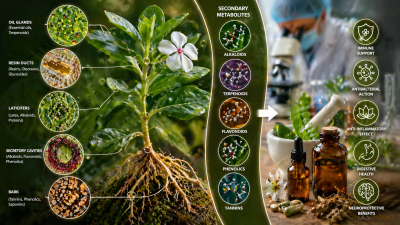
The intersection of Biology and Medicine often focuses on which specific plant tissue or part yields a particular therapeutic compound. Medicinal properties are usually the result of “Secondary Metabolites” stored in specialized secretory or permanent tissues.
1. Bark and Phloem as Medicinal Reservoirs
The bark, which botanically includes the periderm and secondary phloem, is a major source of alkaloids and glycosides.
- Cinchona Bark (Quinine): Extracted from the bark of Cinchona officinalis. The alkaloids are found in the phloem and parenchyma cells. It remains the classic antimalarial drug.
- Arjuna Bark: The bark of Terminalia arjuna is rich in tannins and minerals. In Ayurveda, it is used for cardiovascular health and strengthening heart muscles.
- Willow Bark (Aspirin): The bark of the Willow tree (Salix) contains Salicin. This was the precursor to the modern synthetic drug Aspirin (Acetylsalicylic acid).
- Cinnamon: The inner bark (secondary phloem) of Cinnamomum contains cinnamaldehyde, used for its antimicrobial and blood-sugar-regulating properties.
2. Laticiferous Tissues (Latex) in Medicine
Latex is a complex emulsion stored in specialized laticifers. It is a potent source of painkillers and enzymes.
- Opium Poppy (Papaver somniferum): The milk-like latex from the unripe seed pods (capsules) contains over 20 alkaloids, including Morphine (analgesic) and Codeine (cough suppressant).
- Papaya (Carica papaya): The latex of the fruit and leaves contains the enzyme Papain, which is used to treat digestive disorders and in wound healing.
- Rubber Tree (Hevea): While primarily industrial, its latex proteins are studied for specialized medical-grade surgical equipment.
3. Secretory Glands and Trichomes
Essential oils and resins produced in glandular tissues have significant antiseptic and therapeutic value.
- Glandular Trichomes (Mint/Tulsi): These epidermal hairs secrete volatile oils like Menthol (from Mint) and Eugenol (from Tulsi/Holy Basil). Tulsi is known for its immunomodulatory and anti-stress properties.
- Cannabis Glands: The glandular trichomes on the flowers of Cannabis secrete CBD (Cannabidiol) and THC, used in managing chronic pain and epilepsy.
- Resin Ducts (Asafoetida/Hing): The oleo-gum resin obtained from the thick roots of Ferula is used for treating digestive and respiratory ailments.
4. Parenchyma and Specialized Storage Tissues
Soft tissues often store complex polysaccharides and antioxidants.
- Aloe Vera (Succulent Parenchyma): The water-storage parenchyma in the leaves contains a gel rich in acemannan. It is used globally for skin tissue repair and as an anti-inflammatory agent.
- Turmeric (Rhizome Parenchyma): The ground tissue of the turmeric rhizome stores Curcumin, a powerful anti-inflammatory and antioxidant compound.
- Garlic and Onion: Specialized parenchyma cells store sulfur-containing compounds (like Allicin) which have potent antibiotic and anti-cholesterol effects.
5. Summary Table: Plant Tissues and Derived Drugs
| Drug/Compound | Plant Source | Specific Tissue/Part | Medical Use |
| Quinine | Cinchona | Bark (Phloem/Cortex) | Malaria treatment |
| Morphine | Papaver | Laticiferous Vessels | Severe pain relief |
| Digoxin | Digitalis | Leaf (Mesophyll/Parenchyma) | Heart failure (Arrhythmia) |
| Taxol | Taxus (Yew) | Bark/Needles | Cancer chemotherapy |
| Reserpine | Rauwolfia | Root (Cortex/Phloem) | Hypertension/Snake bite |
| Vincristine | Catharanthus | Leaf (Parenchyma) | Leukemia treatment |
UPSC Prelims Facts and Trivia
- Alkaloids: Most medicinal compounds in tissues are “Alkaloids”—nitrogenous bases that are bitter to taste and evolved as a defense to prevent animals from eating the plant.
- Secondary Metabolites: Unlike primary metabolites (sugars, proteins) which are found in all cells, secondary metabolites are often localized in specific tissues like Idioblasts (specialized cells).
- Ethnobotany: Many modern medicines were discovered by observing traditional uses of specific plant tissues by indigenous communities.
- Phytotherapy: The study of using plant extracts and tissues for healing is known as Phytotherapy, which forms the basis of many AYUSH (Ayurveda, Yoga, Unani, Siddha, Homeopathy) treatments in India.