

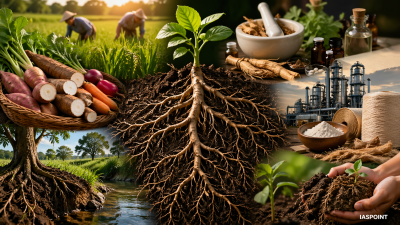
The economic importance of roots spans multiple sectors including food security, medicine, industry, and environmental conservation. Roots are not merely structural organs but are vital bio-resources.
Roots as a Primary Food Source
Many plants store significant quantities of carbohydrates (mainly starch) in their modified roots, making them essential dietary staples globally.
- High-Calorie Staples: Cassava (Tapioca), Sweet Potato, and Yam are critical for food security in tropical regions.
- Vegetables: Root vegetables provide essential vitamins and minerals. Examples include Carrots (Vitamin A), Radishes, Turnips, and Beetroots.
- Sugar Production: The Sugar Beet (Beta vulgaris) is a major source of commercial sugar, accounting for approximately 20% of the world’s sugar production.
Medicinal and Pharmaceutical Importance
Roots are often the most potent part of medicinal plants, containing alkaloids, glycosides, and essential oils used in traditional and modern medicine.
| Plant Name | Common Name | Medicinal Use |
| Chlorophytum borivilianum | Safed Musli | Used as a general health tonic and for immunity. |
| Withania somnifera | Ashwagandha | Adaptogen used to reduce stress and anxiety. |
| Glycyrrhiza glabra | Liquorice (Mulethi) | Used for treating sore throat and digestive issues. |
| Rauwolfia serpentina | Sarpagandha | Source of Reserpine, used to treat high blood pressure. |
| Curcuma amada | Mango Ginger | Used as an antioxidant and for digestive ailments. |
Industrial and Commercial Applications
Beyond consumption, roots serve as raw materials for various industries.
- Dyes and Coloring Agents: The roots of the Madder plant (Rubia tinctorum) provide a red dye (Alizarin). Turmeric (a rhizome/underground stem, often studied alongside roots) and Alkanet roots are used for natural coloring.
- Beverages and Flavoring: Chicory roots are roasted and ground as a substitute for or additive to coffee. Sarsaparilla roots are used in flavoring beverages and herbal teas.
- Essential Oils: Vetiver (Chrysopogon zizanioides), known as Khus, has aromatic roots used in perfumes, soaps, and traditional cooling mats.
Ecological and Agricultural Significance
The functional morphology of roots plays a pivotal role in ecosystem services and soil health.
- Soil Conservation: The extensive fibrous root systems of grasses and the deep tap roots of trees bind soil particles, preventing wind and water erosion.
- Nitrogen Fixation: Leguminous plants (e.g., Pea, Soybeans) possess root nodules containing Rhizobium bacteria. These convert atmospheric nitrogen into a form usable by plants, reducing the need for chemical fertilizers.
- Soil Enrichment: As roots decay, they add organic matter (humus) to the soil, improving its texture and water-holding capacity.
UPSC Prelims Trivia: Root Economics
- Tapioca (Cassava): It is a drought-resistant crop and is often referred to as a “famine reserve” crop.
- Ginseng: The root of the Panax plant is one of the most commercially valuable roots in the global herbal market due to its purported energy-boosting properties.
- Vetiver for Soil: The Government of India has promoted the “Vetiver System” for bio-engineering and slope stabilization in hilly terrains due to the plant’s deep, vertical root system.
- Difference in Origin: While Ginger and Turmeric are often grouped with root crops in markets, they are morphologically rhizomes (stems), whereas Sweet Potato is a root tuber. UPSC frequently tests this distinction in the “General Science” section.