

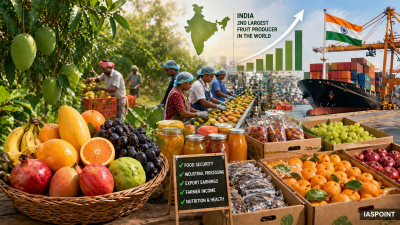
The economic importance of fruits encompasses their role in food security, industrial processing, and international trade. Fruits are not merely biological seed-carriers but are high-value commodities that contribute significantly to the agricultural GDP of India, which is currently the second-largest producer of fruits globally.
Nutritional Security and Dietary Role
Fruits are categorized as “protective foods” due to their high concentration of essential vitamins, minerals, and antioxidants.
- Vitamin Sources: Citrus fruits (Lemons, Oranges) are primary sources of Vitamin C, while Mango and Papaya are rich in Vitamin A (Beta-carotene).
- Mineral Content: Bananas and Dates are significant sources of Potassium and Iron, respectively.
- Dietary Fiber: The pericarp of most fruits provides roughage, essential for digestive health and preventing metabolic syndromes.
Industrial and Commercial Applications
The structural components of fruits—the epicarp, mesocarp, and endocarp—serve as raw materials for various industries.
- Edible Oils: Extracted from the seeds or mesocarp of fruits.
- Coconut Oil: Derived from the endosperm.
- Palm Oil: Derived from the mesocarp of the oil palm fruit.
- Beverage Industry: * Juice Processing: Extensive use of berries and hesperidiums (Citrus).
- Fermentation: Grapes (Berries) are the primary substrate for the global wine industry; Apples are used for cider.
- Pectin Production: Derived primarily from the peels (epicarp) of citrus fruits and pomace of apples, pectin is a crucial thickening agent in the food industry for jams and jellies.
- Essential Oils and Fragrances: The rinds of citrus fruits contain oil glands used in aromatherapy, cosmetics, and food flavoring.
Fruits in the Pharmaceutical Industry
Many fruits contain bioactive compounds used in the synthesis of drugs and traditional medicine.
- Amla (Indian Gooseberry): A core component of Ayurvedic formulations like Chyawanprash due to its potent antioxidant properties.
- Opium Poppy: The latex from the unripe capsule (a dry fruit) is the source of morphine and codeine.
- Bael (Aegle marmelos): The pulp of this fruit is used extensively in treating gastrointestinal disorders.
Agricultural and Export Economy
India’s “Golden Revolution” focuses on the holistic development of the horticulture sector, where fruits play a leading role.
| Fruit Category | Major Economic Examples | Key Export Significance |
| Tropical Fruits | Mango, Banana, Guava | India is the world leader in Mango production (Alphonso variety). |
| Temperate Fruits | Apple, Pear, Walnut | Significant for the economy of Jammu & Kashmir and Himachal Pradesh. |
| Arid Fruits | Pomegranate, Date Palm | Emerging export potential from Rajasthan and Gujarat. |
Post-Harvest Technology and Value Addition
Because fruits are perishable, they drive the development of rural infrastructure through:
- Cold Storage Chains: Essential for maintaining the shelf life of temperate fruits.
- Canning and Drying: Dehydrated fruits (Raisins from Grapes, Prunes from Plums) create value-added products with longer shelf lives and higher market prices.
UPSC Prelims Trivia: Economic Geography of Fruits
- Geographical Indication (GI) Tags: Several Indian fruits hold GI tags, which enhance their market value in international trade (e.g., Shahi Litchi of Bihar, Nagpur Orange, Jalgaon Banana).
- The Cashew “Nut”: Economically, the “nut” is the true fruit (a nut), while the “Cashew Apple” is a false fruit (swollen pedicel) used in the production of Feni (a traditional liquor).
- Coconut Fiber (Coir): The fibrous mesocarp of the coconut (a drupe) is the basis of a major cottage industry for mats, ropes, and geo-textiles.