

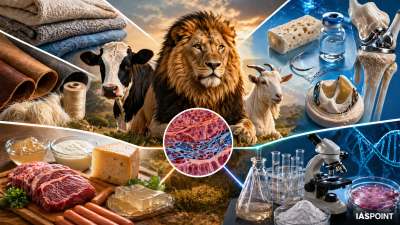
Animal tissues are not only biological units of life but also serve as significant raw materials in various industries including textiles, medicine, food processing, and biotechnology.
1. Epithelial Tissue Applications
Epithelial secretions and modified epithelial structures form the basis of several multi-billion dollar industries.
- Sericulture (Silk Industry): The silk fiber is a proteinaceous secretion from the modified salivary glands (labial glands) of the silkworm (Bombyx mori). This glandular epithelium produces fibroin and sericin proteins.
- Apiculture (Honey and Wax): Beeswax is secreted by abdominal wax glands (specialized epithelium) of worker honeybees. It is used extensively in cosmetics, pharmaceuticals, and candle making.
- Leather Industry: While “leather” is processed connective tissue, the quality is determined by the removal of the epidermal epithelial layer.
- Pearl Culture: The Mantle tissue of pearl oysters (Pinctada) is responsible for secreting nacre (mother-of-pearl). In artificial pearl culture, a piece of donor mantle tissue is grafted into a host oyster to stimulate pearl formation.
2. Connective Tissue Applications
Connective tissues provide structural proteins and bioactive compounds used in food and healthcare.
- Gelatin Production: Derived from the partial hydrolysis of collagen found in animal connective tissues (bones, tendons, and skins). It is a staple in the food industry (gummies, marshmallows) and pharmaceutical capsules.
- Bone Meal and Fertilizer: Crushed skeletal tissue (bone) is a rich source of phosphorus and calcium, used as an organic fertilizer and animal feed supplement.
- Sponge Industry: The “bath sponge” is actually the cleaned Spongin fiber skeleton (a type of connective tissue protein) of marine sponges like Euspongia.
- Chitin and Chitosan: Extracted from the exoskeletons of crustaceans (shrimp, crabs). While chitin is a secreted cuticle, it is often grouped with connective structures. It is used in water purification, wound dressing, and as a stabilizer in food.
3. Muscular Tissue and the Meat Industry
The primary economic value of muscular tissue lies in its role as a high-protein food source for global populations.
- Livestock and Poultry: The “meat” consumed is primarily Skeletal Muscular Tissue. The economic value is determined by the ratio of muscle to fat (adipose tissue) and the presence of myoglobin (red vs. white meat).
- Aquaculture: Fish muscle tissue is prized for its high content of Omega-3 fatty acids. The segmentally arranged Myotomes provide the distinct “flaky” texture of cooked fish.
- Soft Tissue Engineering: Research into “Cultured Meat” or “Lab-grown Meat” involves the in-vitro cultivation of animal muscle stem cells (myoblasts) to create muscle tissue without animal slaughter.
4. Nervous and Sensory Tissue in Bio-Instrumentation
Nervous tissues have inspired significant advancements in technology and medicine.
- Biomimicry: The study of Sensory Epithelium in animals has led to the development of sophisticated sensors. For example, sonar technology mimics the echolocation (nervous coordination) of bats and dolphins.
- Neurotoxins in Medicine: Venom from snakes and cone snails (which targets the nervous tissue of prey) is used in the synthesis of high-potency painkillers and anticoagulants. For instance, Ziconotide is a painkiller derived from snail venom that blocks calcium channels in nervous tissue.
- Giant Axon Research: The Squid Giant Axon was historically fundamental in understanding how nerve impulses are conducted, leading to the development of modern neurobiology and related medical diagnostics.
5. Economic Utility of Fluid Connective Tissue (Blood)
- Antisera and Vaccines: Animals like horses are often used to produce Antisera. Small doses of toxins are injected, and the animal’s blood (fluid connective tissue) produces antibodies, which are then harvested to treat snakebites or tetanus in humans.
- Horseshoe Crab Blood (LAL Test): The blue, copper-based haemolymph of the Horseshoe Crab contains Amoebocytes. These cells are used to create Limulus Amebocyte Lysate (LAL), a critical reagent used to test medical equipment for bacterial contamination.
Summary Table: Animal Tissues and Economic Outputs
| Tissue Type | Economic Product | Source Animal | Industry |
| Glandular Epithelium | Silk | Silkworm | Textiles |
| Mantle Epithelium | Pearls | Oyster | Jewelry |
| Collagen (Connective) | Gelatin | Cattle/Pigs | Food/Pharma |
| Skeletal Muscle | Meat | Poultry/Livestock | Food |
| Haemolymph (Fluid) | LAL Reagent | Horseshoe Crab | Healthcare |
| Adipose Tissue | Tallow/Lard | Cattle/Pigs | Soap/Industrial |
Key Facts for UPSC Prelims
- Suture Materials: Historically, “Catgut” (a tough fiber) was made from the connective tissue (submucosa) of sheep or goat intestines for surgical sutures.
- Isinglass: A substance obtained from the dried swim bladders (collagenous connective tissue) of fish, used for the clarification of wine and beer.
- Stem Cell Technology: The high regenerative capacity of certain animal tissues (like the liver or skin) is a focal point for studying regenerative medicine and tissue engineering.
- Bio-indicators: The sensitivity of the epithelial lining in amphibians makes them excellent bio-indicators for environmental pollution, as they absorb toxins through their skin.