

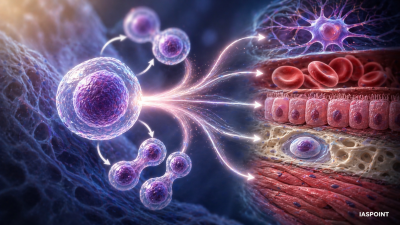
Stem cells are undifferentiated biological cells that can differentiate into specialized cells and can divide (through mitosis) to produce more stem cells. They serve as an internal repair system, replenishing other cells as long as the person or animal is still alive.
Unique Properties of Stem Cells
- Self-Renewal: The ability to go through numerous cycles of cell division while maintaining the undifferentiated state.
- Potency: The capacity to differentiate into specialized cell types (e.g., muscle cells, neurons, blood cells).
Classification Based on Potency
Potency refers to the varying ability of stem cells to differentiate into different cell types.
| Type | Description | Examples |
| Totipotent | Can differentiate into all cell types, including embryonic and extra-embryonic (placenta) tissues. | Zygote (up to the 4-cell stage). |
| Pluripotent | Can give rise to all cell types that make up the body (all three germ layers). | Embryonic Stem Cells (ESCs). |
| Multipotent | Can develop into more than one cell type, but are limited to a specific lineage. | Hematopoietic stem cells (blood-forming). |
| Oligopotent | Can differentiate into only a few closely related cell types. | Lymphoid or myeloid stem cells. |
| Unipotent | Can produce only one cell type but have the property of self-renewal. | Skin cells (basal layer), muscle stem cells. |
Major Sources of Stem Cells
1. Embryonic Stem Cells (ESCs)
Derived from the blastocyst (a 3–5 day old embryo). These are pluripotent and possess the highest potential for medical use but are subject to significant ethical debate.
2. Adult Stem Cells (Somatic Stem Cells)
Found in small numbers in most adult tissues, such as bone marrow or fat. They are typically multipotent and act as a repair system for the specific organ in which they reside.
3. Induced Pluripotent Stem Cells (iPSCs)
A breakthrough in biotechnology where adult somatic cells (like skin cells) are genetically reprogrammed to an embryonic-like pluripotent state.
- Significance: They bypass the ethical concerns of ESCs and the risk of immune rejection since they can be made from the patient’s own cells.
- Key Fact: Shinya Yamanaka won the Nobel Prize in 2012 for this discovery.
4. Umbilical Cord Blood Stem Cells
Collected from the umbilical cord after childbirth. These are rich in hematopoietic stem cells and are increasingly “banked” for future use in treating blood-related disorders.
Applications of Stem Cell Technology
- Regenerative Medicine: Replacing or “regenerating” human cells, tissues, or organs to restore normal function (e.g., treating spinal cord injuries).
- Drug Testing: Using stem-cell-derived specialized cells to test new medicines for safety and efficacy before human trials.
- Treatment of Blood Disorders: Bone marrow transplants (the most common stem cell therapy) are used to treat leukemia, lymphoma, and sickle cell anemia.
- Gene Therapy: Stem cells can be used as vehicles to deliver healthy genes into patients with genetic diseases.
Stem Cell Research in India
- Regulatory Body: The Department of Biotechnology (DBT) and the Indian Council of Medical Research (ICMR) jointly formulate guidelines for stem cell research.
- Legal Status: In India, “commercial” stem cell banking is allowed, but the use of stem cells for anything other than established treatments (like bone marrow transplants for blood cancers) is considered experimental.
- Ethics: India prohibits human cloning and the creation of embryos specifically for research purposes.
Key Facts and Trivia for UPSC
- Niche: The specific microenvironment in which stem cells reside is called the “stem cell niche,” which controls their activity and division.
- Somatic Cell Nuclear Transfer (SCNT): A laboratory technique for creating a clonal embryo using a donor nucleus and an egg cell; it is a method used to harvest patient-specific stem cells.
- Mesenchymal Stem Cells: Multipotent cells found in bone marrow that can differentiate into a variety of cell types, including osteoblasts (bone cells) and chondrocytes (cartilage cells).
- Hematopoiesis: The process by which multipotent stem cells in the bone marrow differentiate into all the different types of blood cells.