

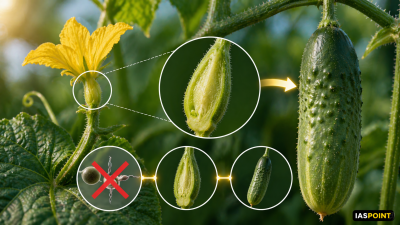
Parthenocarpy is a biological phenomenon in which a fruit develops without the process of fertilization of ovules. The term is derived from the Greek words parthenos (virgin) and karpos (fruit). Unlike normal fruit development, where fertilization triggers the growth of the ovary, in parthenocarpic plants, the ovary matures into a fruit in the absence of a pollination stimulus or fertilization.
Distinction from Other Processes
It is vital for UPSC aspirants to distinguish parthenocarpy from similar reproductive concepts:
- Parthenocarpy: Development of fruit without fertilization (results in seedless fruits).
- Apomixis: Development of seeds without fertilization (mimics sexual reproduction).
- Parthenogenesis: Development of an unfertilized egg/gamete into a new individual (commonly used in zoology).
Types of Parthenocarpy
1. Natural (Genetic) Parthenocarpy
This occurs due to natural mutations or genetic factors within the plant. These plants are often self-sterile.
- Examples: Banana, Pineapple, Grapes (certain varieties like Thompson Seedless), and Fig.
- Mechanism: High endogenous levels of auxins in the ovaries of these plants trigger fruit set naturally.
2. Environmental Parthenocarpy
Certain environmental conditions like low temperatures, frost, or high humidity can interfere with pollination or fertilization, leading to the development of seedless fruits.
- Example: Seedless tomatoes or pears formed during unusually cold springs.
3. Induced (Chemically Stimulated) Parthenocarpy
This is the application of plant growth regulators to unpollinated flowers to stimulate fruit development.
- Hormones Used: Auxins and Gibberellins.
- Process: The hormones are sprayed on the flowers, mimicking the natural hormonal surge that usually follows fertilization.
- Examples: Seedless Watermelons, Cucumbers, and Citrus fruits produced for commercial markets.
Biological and Commercial Significance
| Aspect | Significance |
| Seedlessness | Highly preferred by consumers for ease of consumption (e.g., Grapes, Watermelon). |
| Processing | Easier for the food industry (making jams, juices, or sauces) as seed removal is not required. |
| Stability | Allows for fruit production in greenhouses or environments where natural pollinators (bees) are absent. |
| Hormonal Balance | Demonstrates the role of phytohormones in controlling the transition from flower to fruit. |
Comparison: Parthenocarpy vs. Apomixis
| Feature | Parthenocarpy | Apomixis |
| Result | Seedless Fruit | Seeded Fruit (but asexual) |
| Fertilization | Absent | Absent |
| Commercial Use | Horticulture (Fruit quality) | Agriculture (Hybrid seed consistency) |
| Examples | Banana, Pineapple | Grasses, Asteraceae |
UPSC Prelims Trivia: Fact Check
- Banana: Commercial bananas are triploid (3n). This chromosomal imbalance makes them sterile, preventing seed formation and making them naturally parthenocarpic.
- Parthenocarpy and Evolution: Since these fruits lack seeds, natural parthenocarpic plants cannot reproduce sexually. They rely entirely on Vegetative Propagation (like suckers or rhizomes) for survival.
- False Seedlessness: Some grapes appear seedless but actually undergo fertilization; the embryo simply aborts early. This is called Stenospermocarpy and is technically different from true parthenocarpy.
- Induced Growth: While Auxins are used for inducing parthenocarpy in tomatoes, Gibberellins are often more effective for inducing seedlessness in grapes.