

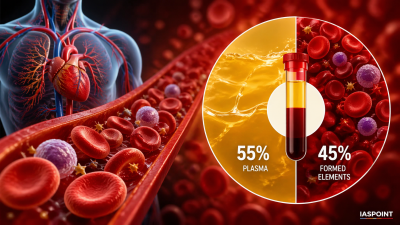
Blood is a specialized fluid connective tissue essential for the transport of nutrients, gases, and hormones. In a healthy adult, blood accounts for approximately 7% to 8% of total body weight, with an average volume of 5 to 5.5 liters. It consists of two primary components: Plasma (55%) and Formed Elements (45%).
Plasma: The Liquid Matrix
Plasma is a straw-colored, viscous fluid that acts as the medium for blood cells.
- Water Content: Comprises 90–92% of plasma.
- Plasma Proteins (6–8%):
- Fibrinogen: Essential for blood coagulation (clotting).
- Globulins: Primarily involved in the body’s defense mechanisms (immunoglobulins/antibodies).
- Albumins: Maintain the Osmotic Balance (BCOP) of the blood.
- Nutrients and Salts: Contains glucose, amino acids, lipids, and electrolytes like Na+, Ca2+, Mg2+, and HCO3-.
Red Blood Cells (Erythrocytes)
RBCs are the most abundant cells in the human body and are primary carriers of respiratory gases.
- Structural Features: Biconcave in shape and enucleated (lacking a nucleus) in most mammals to maximize space for Hemoglobin. They lack mitochondria, performing anaerobic respiration.
- Hemoglobin (Hb): An iron-containing complex protein. A healthy individual has 12–16g of Hb in every 100ml of blood.
- Life Cycle: Formed in the Red Bone Marrow (Erythropoiesis). They have an average lifespan of 120 days, after which they are destroyed in the Spleen (often called the “Graveyard of RBCs”).
- Function: Transport of Oxygen via Oxyhemoglobin and Carbon dioxide via Carbamino-hemoglobin.
White Blood Cells (Leucocytes)
WBCs are the nucleated, colorless components of blood responsible for the immune response. They are categorized based on the presence or absence of granules in their cytoplasm.
Granulocytes
- Neutrophils: The most numerous WBCs (60–65%). They are phagocytic cells that destroy foreign organisms.
- Eosinophils: (2–3%) Associated with allergic reactions and resistance to parasitic infections.
- Basophils: The least abundant (0.5–1%). They secrete Histamine, Serotonin, and Heparin and are involved in inflammatory reactions.
Agranulocytes
- Lymphocytes: (20–25%) Occur in two forms: B-lymphocytes and T-lymphocytes. Both are responsible for specific immune responses (antibody production and cell-mediated immunity).
- Monocytes: (6–8%) Large phagocytic cells that migrate into tissues to become macrophages.
Platelets (Thrombocytes)
Platelets are cell fragments produced from Megakaryocytes (special cells in the bone marrow).
- Count: Normal concentration ranges from 1,50,000 to 3,50,000 per mm3 of blood.
- Function: They release a variety of substances (Thromboplastins) involved in the Coagulation or clotting of blood.
- Clinical Fact: A significant reduction in platelet count (Thrombocytopenia) can lead to clotting disorders and excessive internal/external bleeding.
Comparison Table of Blood Formed Elements
| Feature | RBC (Erythrocytes) | WBC (Leucocytes) | Platelets (Thrombocytes) |
| Shape | Biconcave Disc | Irregular/Amoeboid | Tiny Fragments |
| Nucleus | Absent (in humans) | Present | Absent |
| Average Count | 5.0 – 5.5 Million/mm3 | 6,000 – 8,000/mm3 | 1.5 – 3.5 Lakh/mm3 |
| Lifespan | 120 Days | Hours to Years | 7 – 10 Days |
| Main Function | Gas Transport (O2, CO2) | Immunity & Defense | Blood Clotting |
| Formation Site | Red Bone Marrow | Bone Marrow & Lymph nodes | Bone Marrow (Megakaryocytes) |
Blood Clotting Mechanism (Coagulation)
Blood clotting is a cascade of biochemical reactions triggered by tissue injury.
- Release of Thromboplastin: Injured tissues and platelets release thromboplastins.
- Prothrombin to Thrombin: In the presence of Calcium ions (Ca2+) and the enzyme Thrombokinase, inactive Prothrombin is converted to active Thrombin.
- Fibrinogen to Fibrin: Thrombin converts soluble Fibrinogen into insoluble Fibrin threads.
- Clot Formation: Fibrin threads trap dead and damaged formed elements to form a “clot” or “coagulum.”
Key Biological Trivia for Prelims
- Serum: Plasma without the clotting factors is called Serum.
- Hematocrit: The volume percentage of RBCs in blood.
- Erythropoietin: A hormone produced by the kidneys that stimulates RBC production.
- Diapedesis: The process by which WBCs squeeze through capillary walls to reach infected tissues.
- Vitamin K: Essential for the synthesis of clotting factors (II, VII, IX, and X) in the liver.
- Hemolysis: The rupture or destruction of RBCs, leading to the release of hemoglobin into the surrounding fluid.