

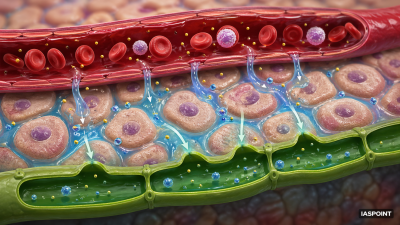
As blood passes through the capillaries in tissues, some water and small water-soluble substances are filtered out into the spaces between the cells. This fluid is known as Interstitial Fluid or Tissue Fluid. When this fluid enters the lymphatic vessels, it is called Lymph. It serves as a vital intermediary between the blood and the body cells.
Composition of Lymph
Lymph is a colorless fluid that is very similar in composition to blood plasma but with significant differences in protein concentration and cell types.
- Plasma-like Base: It contains water, electrolytes, and nutrients.
- Protein Content: Lymph has a much lower concentration of proteins compared to blood plasma.
- Formed Elements: It lacks RBCs and platelets. It is rich in Lymphocytes, which are specialized white blood cells.
- Fats: In the digestive tract, lymph carries absorbed fats, giving it a milky appearance (known as Chyle in the small intestine).
The Lymphatic System
The lymphatic system is an elaborate network of vessels that collects interstitial fluid and drains it back into the major veins, ensuring fluid balance in the body.
- Lymphatic Capillaries: Microscopic, blind-ended vessels located in the intercellular spaces.
- Lymphatic Vessels: Larger tubes formed by the union of capillaries; they contain valves to ensure one-way flow toward the heart.
- Lymph Nodes: Small, bean-shaped structures that act as filters. They contain high concentrations of lymphocytes and macrophages to trap and destroy pathogens.
- Lymphatic Organs: Includes the Spleen (largest lymphatic organ), Thymus, and Tonsils.
Functions of Lymph
Lymph performs several critical physiological roles that complement the circulatory system.
- Fluid Balance: It drains excess tissue fluid back into the blood. Without this, tissues would swell (a condition known as Edema).
- Absorption of Fats: Specialized lymphatic capillaries in the intestinal villi, called Lacteals, absorb fats and fat-soluble vitamins (A, D, E, K) from the digestive tract.
- Immune Response: It transports lymphocytes and antibodies to the blood. It acts as a site where the immune system monitors for pathogens.
- Transportation: It carries hormones and metabolic wastes from the cells to the blood.
Comparison: Blood vs. Lymph
| Feature | Blood | Lymph |
| Color | Red (due to Hemoglobin) | Colorless |
| Components | Plasma, RBCs, WBCs, Platelets | Plasma, WBCs (mostly Lymphocytes) |
| Protein Content | High | Low |
| Direction of Flow | Circular (Heart → Tissue → Heart) | Unidirectional (Tissue → Heart) |
| Oxygen & Nutrients | High concentration | Low concentration |
| Waste & CO2 | Relatively low | Higher concentration |
Important Lymphatic Organs for UPSC
- Spleen: Acts as a filter for blood, removing old RBCs and trapping blood-borne pathogens. It serves as a reservoir for erythrocytes and lymphocytes.
- Thymus: A primary lymphoid organ where T-lymphocytes mature. It is large in infants but shrinks significantly after puberty (atrophy).
- Tonsils: Small masses of lymphoid tissue in the pharynx that provide the first line of defense against inhaled or swallowed pathogens.
- Bone Marrow: The primary site where all blood cells (including B and T cell precursors) are produced.
Clinical and Biological Trivia
- Lymphedema: Swelling caused by an accumulation of lymph fluid, often due to a blockage in the lymphatic system (e.g., in Filariasis/Elephantiasis caused by Wuchereria bancrofti).
- Lymphoma: A type of cancer that begins in the lymphocytes of the lymphatic system.
- Thoracic Duct: The largest lymphatic vessel in the body, which collects most of the lymph and empties it into the left subclavian vein.
- Peyer’s Patches: Small masses of lymphatic tissue found in the ileum of the small intestine that monitor bacterial populations.