

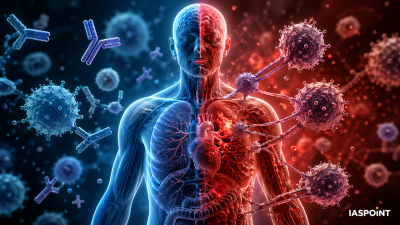
Autoimmunity is a condition in which the body’s immune system undergoes a functional aberration, losing its ability to distinguish between “self” and “non-self” antigens. Under normal physiological conditions, the immune system exhibits Self-Tolerance, where T-cells and B-cells that react against the body’s own proteins are eliminated during maturation. In autoimmune disorders, this mechanism fails, and the immune system attacks its own cells and tissues, leading to inflammation and organ damage.
Mechanisms of Autoimmune Failure
The breakdown of self-tolerance can occur through several biological pathways:
- Genetic Factors: Certain HLA (Human Leukocyte Antigen) genes are strongly linked to an increased risk of specific autoimmune diseases.
- Molecular Mimicry: Some pathogens possess antigens that structurally resemble the host’s “self” antigens. The immune response against the pathogen accidentally targets the host’s similar-looking tissues.
- Environmental Triggers: Infections, drugs, and exposure to specific chemicals can alter self-antigens, making them appear “foreign” to the immune system.
- Hormonal Influence: Many autoimmune diseases are significantly more prevalent in women, suggesting that sex hormones like estrogen may play a role in modulating immune responses.
Classification of Autoimmune Diseases
Autoimmune diseases are categorized based on whether they target a single organ or multiple systems throughout the body.
| Category | Description | Primary Examples |
| Organ-Specific | The immune response is directed against a specific organ or gland. | Hashimoto’s Thyroiditis (Thyroid), Type 1 Diabetes (Pancreas). |
| Systemic (Non-Specific) | The immune response targets antigens present across multiple tissues or organs. | Systemic Lupus Erythematosus (SLE), Rheumatoid Arthritis. |
Major Autoimmune Disorders
The following disorders are frequently cited in biological and medical contexts relevant to the UPSC syllabus:
Rheumatoid Arthritis (RA)
A chronic systemic inflammatory disorder that primarily affects the synovial joints. The immune system attacks the lining of the joint capsules, leading to painful swelling, bone erosion, and joint deformity. It is characterized by the presence of “Rheumatoid Factor” in the blood.
Type 1 Diabetes Mellitus
Occurs when the immune system specifically targets and destroys the Beta cells in the Islets of Langerhans within the pancreas. This results in a total deficiency of insulin, requiring lifelong external insulin administration.
Myasthenia Gravis
An autoimmune neuromuscular disorder where antibodies block or destroy nicotinic acetylcholine receptors at the junction between the nerve and the muscle. This prevents muscle contraction, leading to skeletal muscle weakness and fatigue.
Multiple Sclerosis (MS)
A condition where the immune system attacks the Myelin sheath, the protective covering of nerve fibers in the central nervous system (brain and spinal cord). This disrupts communication between the brain and the rest of the body.
Vitiligo
An autoimmune attack on melanocytes, the cells responsible for skin pigmentation. This results in the loss of skin color in patches.
Comparison: Normal vs. Autoimmune Response
| Feature | Normal Immune Response | Autoimmune Response |
| Target | Foreign pathogens (Bacteria, Viruses). | Host’s own healthy cells and tissues. |
| Self-Tolerance | Maintained; T and B cells recognize self. | Lost; immune cells attack self-antigens. |
| Result | Elimination of infection and healing. | Chronic inflammation and tissue destruction. |
| Duration | Acute (ends when pathogen is cleared). | Chronic (often lifelong management required). |
Diagnostic and Clinical Facts
- Autoantibodies: The presence of specific antibodies directed against self-proteins (e.g., Anti-nuclear antibodies or ANA) is a hallmark of diagnosis.
- Treatment Modalities: Since there is currently no “cure” for most autoimmune diseases, treatment focuses on Immunosuppressants (drugs that dial down the immune system) and anti-inflammatory medications like corticosteroids.
- Trivia: The Thymus gland plays a critical role in preventing autoimmunity by “testing” T-cells during their development. If a T-cell reacts to self-antigens in the thymus, it is typically signaled to undergo programmed cell death (apoptosis).