

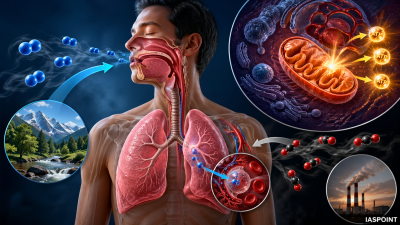
Respiration is a metabolic process by which the living cells of an organism obtain energy (in the form of ATP) by taking in oxygen and releasing carbon dioxide from the oxidation of complex organic substances. In the animal kingdom, the mechanisms of breathing vary significantly based on habitats and levels of organization.
Evolutionary Trends in Respiratory Organs
Different groups of animals have evolved specific organs to facilitate the exchange of gases (O2 and CO2) according to their environment.
| Organism/Group | Respiratory Organ/Mechanism | Habitat |
| Lower Invertebrates (Sponges, Coelenterates, Flatworms) | Entire body surface (Simple Diffusion) | Aquatic |
| Earthworms | Moist Cuticle (Cutaneous respiration) | Terrestrial/Moist |
| Insects | Tracheal Tubes (Network of tubes) | Terrestrial |
| Aquatic Arthropods and Molluscs | Gills (Branchial respiration) | Aquatic |
| Fishes | Gills | Aquatic |
| Amphibians (Frogs) | Moist skin and Lungs | Dual (Land/Water) |
| Reptiles, Birds, and Mammals | Lungs (Pulmonary respiration) | Terrestrial |
The Human Respiratory System
The human respiratory system is divided into the conducting part and the respiratory (exchange) part.
The Conducting Part
This section transports atmospheric air to the alveoli, clears it from foreign particles, humidifies it, and brings the air to body temperature.
- External Nostrils: Open above the upper lips.
- Pharynx: A passage common to both food and air.
- Larynx (Sound Box): A cartilaginous box which helps in sound production. During swallowing, the glottis is covered by a thin elastic cartilaginous flap called the epiglottis to prevent food entry into the larynx.
- Trachea (Windpipe): A straight tube extending up to the mid-thoracic cavity. It is supported by incomplete cartilaginous rings to prevent collapse.
The Exchange Part (The Lungs)
The trachea divides at the level of the 5th thoracic vertebra into right and left primary bronchi, which further branch into bronchioles and terminate in alveoli.
- Alveoli: Very thin, irregular-walled, and vascularized bag-like structures. They are the actual sites of diffusion of O2 and CO2 between blood and atmospheric air.
- Pleura: A double-layered membrane covering the lungs. The pleural fluid between the layers reduces friction on the lung surface.
- Diaphragm: A dome-shaped muscular structure that separates the thoracic cavity from the abdominal cavity. It is the primary muscle of respiration.
Mechanics of Breathing
Breathing involves two main stages: Inspiration and Expiration, driven by pressure gradients between the lungs and the atmosphere.
- Inspiration: Occurs when the pressure within the lungs (intra-pulmonary pressure) is less than the atmospheric pressure. This is achieved by the contraction of the diaphragm and external intercostal muscles, which increases the volume of the thoracic chamber.
- Expiration: Occurs when the intra-pulmonary pressure is higher than the atmospheric pressure. Relaxation of the diaphragm and intercostal muscles reduces the thoracic volume, forcing air out.
Respiratory Volumes and Capacities (Fact Sheet)
For UPSC Prelims, understanding these numerical values and definitions is essential:
- Tidal Volume (TV): Volume of air inspired or expired during a normal respiration (approx. 500 mL).
- Inspiratory Reserve Volume (IRV): Additional volume of air a person can inspire by a forcible inspiration (2500 mL to 3000 mL).
- Residual Volume (RV): Volume of air remaining in the lungs even after a forcible expiration (1100 mL to 1200 mL).
- Vital Capacity (VC): The maximum volume of air a person can breathe in after a forced expiration (TV + IRV + ERV).
Important Trivia for UPSC
- Cellular Respiration: Occurs in the mitochondria, where glucose is broken down to release energy.
- Transport of Gases: About 97% of O2 is transported by RBCs in the blood as oxyhemoglobin. CO2 is primarily transported as bicarbonate ions (70%).
- Regulation: The respiratory rhythm center is located in the medulla oblongata of the brain. A “pneumotaxic center” in the pons can moderate the functions of the respiratory rhythm center.
- Occupational Respiratory Disorders: Silicosis and Asbestosis occur in industries involving stone-breaking or grinding, where long-term exposure to dust leads to proliferation of fibrous tissue (fibrosis) and serious lung damage.