

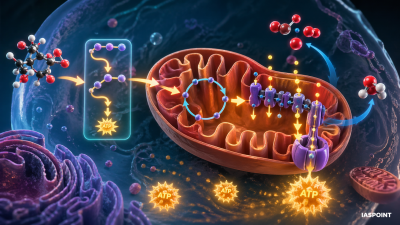
Cellular respiration is the multi-step metabolic process by which living cells break down organic molecules (primarily glucose) to release energy in the form of Adenosine Triphosphate (ATP). While “breathing” refers to the physical exchange of gases at the pulmonary level, cellular respiration is the chemical process occurring within the cells.
Classification of Respiration
Based on the availability of oxygen, cellular respiration is divided into two types:
| Feature | Aerobic Respiration | Anaerobic Respiration |
| Oxygen Requirement | Requires molecular oxygen (O2). | Occurs in the absence of oxygen. |
| Site of Occurrence | Cytoplasm and Mitochondria. | Only in the Cytoplasm. |
| End Products | CO2, H2O, and Energy. | Lactic acid (animals) or Ethanol + CO2 (yeast). |
| Energy Yield | High (approx. 36-38 ATP per glucose). | Low (2 ATP per glucose). |
| Complete Oxidation | Yes; glucose is fully broken down. | No; glucose is partially oxidized. |
Stages of Aerobic Respiration
Aerobic respiration occurs in four distinct stages. For UPSC, it is vital to know the location and primary inputs/outputs of each stage.
1. Glycolysis (EMP Pathway)
This occurs in the cytoplasm and is common to both aerobic and anaerobic respiration.
- Process: One molecule of Glucose (6-carbon) is broken down into two molecules of Pyruvic Acid (3-carbon).
- Net Gain: 2 ATP and 2 NADH.
- Trivia: It does not require oxygen and is the only source of energy for cells lacking mitochondria (like mature RBCs).
2. Link Reaction (Oxidative Decarboxylation)
The pyruvic acid enters the mitochondrial matrix.
- Process: Pyruvic acid is converted into Acetyl Co-A.
- By-products: CO2 is released, and NAD^+ is reduced to NADH.
3. Krebs Cycle (TCA Cycle / Citric Acid Cycle)
Named after Hans Krebs, this occurs in the mitochondrial matrix.
- Process: Acetyl Co-A enters a cyclic pathway to produce energy carriers.
- Outputs: For every glucose molecule (2 cycles), the products are 2 ATP (via GTP), 6 NADH, and 2 FADH2.
- Waste: CO2 is released as a metabolic waste product.
4. Electron Transport Chain (ETC) and Oxidative Phosphorylation
This occurs on the Inner Mitochondrial Membrane (Cristae).
- Process: High-energy electrons from NADH and FADH2 are passed through a series of complexes.
- Final Electron Acceptor: Oxygen acts as the final acceptor of electrons and protons, forming water (H2O).
- ATP Synthesis: The energy released is used by the enzyme ATP Synthase to produce the bulk of the cell’s ATP.
Anaerobic Respiration (Fermentation)
When oxygen is limited, cells resort to fermentation to regenerate NAD^+ for glycolysis.
- Lactic Acid Fermentation: Occurs in human muscle cells during strenuous exercise. The accumulation of lactic acid leads to muscle fatigue and cramps.
- Alcoholic Fermentation: Occurs in yeast (fungi). It converts pyruvate into Ethanol and CO2. This is widely used in the brewing and baking industries.
Respiratory Quotient (RQ)
The RQ is the ratio of the volume of CO2 evolved to the volume of O2 consumed during respiration. It varies depending on the respiratory substrate.
- Carbohydrates: RQ = 1.0
- Fats (Tripalmitin): RQ = 0.7
- Proteins: RQ ≈ 0.9
Key Facts for UPSC Prelims
- Mitochondria: Known as the “Powerhouse of the Cell” because it is the site of the Krebs cycle and ETC.
- ATP (Adenosine Triphosphate): Known as the “Energy Currency” of the cell.
- Cyanide Poisoning: Cyanide is lethal because it inhibits the Electron Transport Chain (specifically Cytochrome c oxidase), halting ATP production.
- Metabolic Water: The water produced at the end of the ETC is called metabolic water, which is crucial for desert animals like the Kangaroo Rat.