

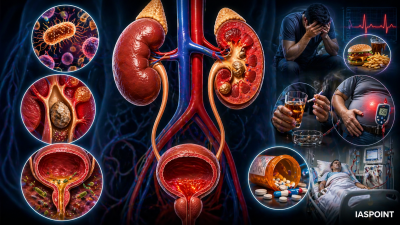
The human excretory system is susceptible to various pathological conditions caused by infections, lifestyle factors, or metabolic failures.
Major Renal Disorders and Pathologies
1. Uremia
- Description: An accumulation of urea and other nitrogenous waste products in the blood.
- Clinical Significance: It is a strong indicator of kidney malfunction or renal failure. If the concentration of urea rises significantly, it can become toxic to the brain and other organs.
- Management: Treated through hemodialysis or, in extreme cases, a kidney transplant.
2. Renal Calculi (Kidney Stones)
- Description: Formed when mineral salts crystallize into insoluble masses within the kidney or urinary tract.
- Chemical Composition: Most stones are composed of calcium oxalate, though uric acid and phosphate stones also occur.
- Impact: Can cause severe pain (renal colic), obstruction of urine flow, and potential tissue damage.
3. Glomerulonephritis
- Description: Inflammation of the glomeruli, the filtration units of the nephron.
- Causes: Often follows a bacterial infection (like Streptococcus) or results from autoimmune responses.
- Result: The filtration membrane becomes damaged, allowing red blood cells and proteins to leak into the urine.
4. Renal Failure (Kidney Failure)
- Description: A significant decrease in the Glomerular Filtration Rate (GFR), rendering the kidneys unable to maintain homeostatic balance.
- Types:
- Acute Renal Failure (ARF): Sudden onset, often reversible if the primary cause (like severe dehydration or poisoning) is treated.
- Chronic Kidney Disease (CKD): Progressive loss of function over time, often linked to hypertension or diabetes.
- Ultimate Treatment: Kidney Transplantation is the most effective long-term solution. To minimize graft rejection, donors are usually close relatives with matching HLA (Human Leukocyte Antigen) types.
Diagnostic Indicators in Urine
Urine analysis (Urinalysis) is a primary diagnostic tool. The presence of certain substances serves as a “biomarker” for specific health issues.
| Condition | Substance Detected | Diagnostic Inference |
| Glycosuria | Glucose | Potential Diabetes Mellitus |
| Ketonuria | Ketone bodies | Diabetes Mellitus, Starvation, or Low-Carb diets |
| Albuminuria | Albumin (Protein) | Damage to the filtration membrane (Glomerulus) |
| Hematuria | Red Blood Cells | Infection, Renal Calculi, or Injury |
| Pyuria | White Blood Cells / Pus | Urinary Tract Infection (UTI) |
| Dysuria | N/A | Painful or difficult urination |
Artificial Kidney: Hemodialysis
When kidneys are unable to filter blood, hemodialysis acts as an artificial replacement.
- Process: Blood is extracted from a convenient artery and passed through a dialyzing unit containing a coiled cellophane tube.
- Dialyzing Fluid: The fluid surrounding the tube has the same composition as plasma but lacks nitrogenous wastes.
- Principle: Waste products move from the blood into the fluid via diffusion along a concentration gradient.
- Final Step: The cleared blood is enriched with anti-heparin and returned to the body through a vein.
Other Common Disorders
Diabetes Insipidus
- Cause: Deficiency of ADH (Antidiuretic Hormone) or the kidneys’ inability to respond to it.
- Symptoms: Polyuria (excessive urination) and polydipsia (excessive thirst). Unlike Diabetes Mellitus, this does not involve blood sugar levels.
Edema
- Cause: Fluid retention in body tissues.
- Mechanism: Often occurs when the kidneys fail to excrete enough sodium and water, leading to increased blood volume and fluid leakage into tissues.
Key Trivia for UPSC Prelims
- Urochrome: The breakdown product of hemoglobin that gives urine its characteristic straw-yellow color.
- Specific Gravity: A measure of the concentration of solutes in urine; abnormal values can indicate dehydration or kidney disease.
- Lithotripsy: A non-invasive medical procedure that uses high-energy shock waves to break kidney stones into small fragments that can be passed naturally.
- Isotonic Dialysis: The dialyzing fluid must be isotonic to blood to prevent the osmotic bursting or shrinking of the patient’s red blood cells.