

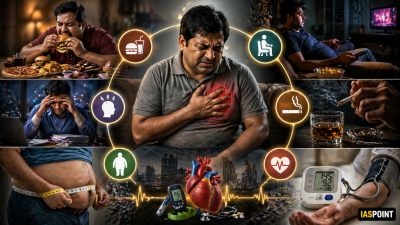
Lifestyle diseases, also known as Non-Communicable Diseases (NCDs), are chronic conditions that result from a combination of genetic, physiological, environmental, and behavioral factors. Unlike infectious diseases, they are not transmitted from person to person but are largely driven by rapid urbanization, sedentary habits, and poor dietary choices. In India, NCDs contribute to over 60% of total deaths.
Major Categories of Lifestyle Diseases
The following table highlights the four primary types of NCDs targeted by global health frameworks.
| Disease Category | Primary Examples | Key Risk Factors |
| Cardiovascular Diseases | Hypertension, Heart Attack, Stroke | High salt intake, Obesity, Tobacco |
| Metabolic Disorders | Diabetes Mellitus (Type 2), Obesity | High sugar/carb diet, Physical inactivity |
| Respiratory Diseases | COPD, Asthma | Air pollution, Smoking, Occupational dust |
| Cancers | Lung, Oral, Breast, Cervical | Carcinogens, Viral infections, Genetics |
Diabetes Mellitus
Diabetes is a metabolic disorder characterized by high blood glucose levels (Hyperglycemia) resulting from defects in insulin secretion, insulin action, or both.
Type 1 vs. Type 2 Diabetes
- Type 1 (Insulin-Dependent): An autoimmune condition where the body attacks insulin-producing beta cells in the pancreas. Usually diagnosed in children.
- Type 2 (Non-Insulin Dependent): The body becomes resistant to insulin or fails to produce enough. It is the most common form linked to obesity and lifestyle.
- Gestational Diabetes: High blood sugar that develops during pregnancy and usually disappears after giving birth, though it increases the risk of Type 2 diabetes later.
Cardiovascular Diseases (CVDs)
CVDs are a group of disorders of the heart and blood vessels.
Hypertension (High Blood Pressure)
- Threshold: Consistently measured blood pressure of 140/90 mmHg or higher.
- Impact: Known as the “Silent Killer,” it is a major risk factor for heart failure, kidney disease, and stroke.
Atherosclerosis
- Mechanism: Deposition of lipids (cholesterol), calcium, and fibrous tissue in the inner walls of arteries, leading to narrowing (plaque formation).
- Consequence: Restricts blood flow to vital organs. If it occurs in coronary arteries, it leads to Angina (chest pain) or Myocardial Infarction (Heart Attack).
Chronic Respiratory Diseases
These diseases affect the airways and other structures of the lung.
COPD (Chronic Obstructive Pulmonary Disease)
- Causes: Primarily tobacco smoke and indoor air pollution from biomass fuel.
- Condition: Includes Chronic Bronchitis and Emphysema (damage to the air sacs/alveoli).
Obesity and Metabolic Syndrome
Obesity is defined by a Body Mass Index (BMI) of 30 or higher.
- Metabolic Syndrome: A cluster of conditions—increased blood pressure, high blood sugar, excess body fat around the waist, and abnormal cholesterol levels—that occur together, increasing the risk of heart disease and stroke.
- Visceral Fat: Fat stored within the abdominal cavity around internal organs is more metabolically active and dangerous than subcutaneous fat.
National and Global Initiatives
India’s NP-NCD Program
The National Programme for Prevention & Control of Non-Communicable Diseases (NP-NCD) focuses on strengthening infrastructure, human resource development, health promotion, and early diagnosis.
- Focus Diseases: Cancer, Diabetes, Cardiovascular Diseases, and Stroke.
Global Targets (WHO)
- “25 by 25” Target: A global goal to reduce premature mortality from NCDs by 25% by the year 2025.
- MPOWER Measures: A policy package intended to assist in the country-level implementation of effective interventions to reduce the demand for tobacco.
Technical Facts for UPSC Prelims
- Insulin Source: Produced by the Islets of Langerhans (Beta cells) in the Pancreas.
- Good vs. Bad Cholesterol: HDL (High-Density Lipoprotein) is “good” as it removes cholesterol from arteries; LDL (Low-Density Lipoprotein) is “bad” as it contributes to plaque.
- Trans Fats: Artificial trans fats (partially hydrogenated oils) increase LDL and decrease HDL. FSSAI has mandated that food products contain no more than 2% trans fats.
- Glycemic Index (GI): A rating system for foods containing carbohydrates. High-GI foods (like white bread) cause a rapid spike in blood sugar, while low-GI foods (like whole grains) release glucose slowly.
Trivia for Quick Revision
- Stroke: Often called a “Brain Attack,” it occurs when the blood supply to part of the brain is interrupted or reduced.
- Carcinogens: Substances like asbestos, tobacco smoke, and UV radiation that can cause cancer.
- Palliative Care: A specialized medical care focusing on providing relief from the symptoms and stress of a serious illness like advanced cancer.