

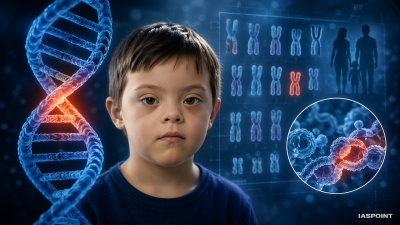
Genetic disorders are conditions caused by abnormalities in an individual’s DNA. These abnormalities can range from a small mutation in a single gene to the addition or subtraction of an entire chromosome or set of chromosomes.
Mendelian Disorders
Mendelian disorders are primarily determined by alteration or mutation in a single gene. These follow the principles of Mendelian inheritance and can be traced through family pedigree analysis.
Autosomal Recessive Disorders
These occur when an individual inherits two mutated copies of a gene (one from each parent).
- Sickle-cell Anaemia: Caused by a point mutation in the beta-globin gene. This leads to the substitution of Glutamic acid by Valine at the sixth position, causing RBCs to become sickle-shaped under low oxygen tension.
- Phenylketonuria (PKU): An inborn error of metabolism where the enzyme phenylalanine hydroxylase is absent. Phenylalanine accumulates and converts into phenylpyruvic acid, leading to mental retardation.
- Cystic Fibrosis: Affects the transport of salt and water in and out of cells, leading to thick, sticky mucus in the lungs and digestive system.
- Thalassemia: A blood disorder characterized by less hemoglobin and fewer red blood cells than normal. It is classified into Alpha and Beta thalassemia based on which chain of the hemoglobin molecule is affected.
Sex-Linked Disorders
These are caused by genes located on the sex chromosomes (usually the X chromosome).
- Haemophilia: Also known as “Royal Disease,” it is an X-linked recessive disorder where a single protein involved in blood clotting is affected. A simple cut can lead to non-stop bleeding.
- Color Blindness: An X-linked recessive disorder resulting in the failure to distinguish between red and green colors. It occurs in about 8% of males and only 0.5% of females.
Chromosomal Disorders
Chromosomal disorders are caused by the absence, excess, or abnormal arrangement of one or more chromosomes. These usually arise due to non-disjunction (failure of chromatids to segregate) during cell division.
Aneuploidy: Numerical Abnormalities
| Disorder | Chromosomal Aberration | Physical/Clinical Features |
| Down’s Syndrome | Trisomy of 21 (47, +21) | Short stature, furrowed tongue, partially open mouth, and mental retardation. |
| Klinefelter’s Syndrome | Extra X in males (47, XXY) | Overall masculine development with feminine development (Gynaecomastia); individuals are sterile. |
| Turner’s Syndrome | Absence of one X in females (45, XO) | Sterile females, rudimentary ovaries, and lack of secondary sexual characteristics. |
| Edward’s Syndrome | Trisomy of 18 | Severe developmental delays and structural abnormalities; often fatal before birth or within the first year. |
Diagnostic Techniques and Medical Applications
Modern science employs several methods to detect genetic disorders during pregnancy or post-natally.
- Amniocentesis: A prenatal test where a small amount of amniotic fluid is sampled to check for chromosomal abnormalities. Note: Its use for sex determination is legally banned in India under the PC-PNDT Act.
- Karyotyping: A laboratory technique that produces an image of an individual’s chromosomes to look for abnormal numbers or structures.
- Pedigree Analysis: The study of an inherited trait in a group of related individuals to determine the pattern of inheritance and predict the risk of recurrence in future generations.
- Gene Therapy: A technique that involves replacing a defective gene with a functional one to treat a genetic disease (e.g., first used for ADA deficiency in 1990).
Key Trivia for UPSC Prelims
- Mitochondrial Disorders: These are inherited exclusively from the mother because mitochondria in the embryo are derived from the egg, not the sperm.
- Genome Mapping: The process of identifying the location of genes and the distance between them on a chromosome, which helps in identifying genetic markers for diseases.
- Rare Diseases: In India, a disease is often defined as “rare” if it affects fewer than 1 in 2,500 people. The National Policy for Rare Diseases (2021) provides financial support for the treatment of such genetic conditions.
- Consanguinity Risk: Marriages between close relatives increase the probability of offspring inheriting two copies of a harmful recessive gene, leading to a higher incidence of Mendelian disorders.