
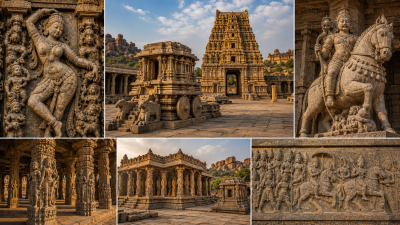
The Vijayanagara Empire (1336–1646 AD) represented a cultural renaissance in South India, synthesizing the sculptural traditions of the Chalukyas, Hoysalas, Pandyas, and Cholas. Under the patronage of dynasties like the Sangama, Saluva, Tuluva, and Aravidu, sculpture evolved into a “militaristic” and “monumental” style. The art was primarily centered in the capital, Hampi (Vijayanagara), and utilized hard Granite as the primary medium, which dictated a move away from the delicate soapstone carvings of the Hoysalas toward more robust, larger-than-life representations.
Signature Features of Vijayanagara Sculptural Art
The Vijayanagara style is marked by its vitality, the use of vast spaces, and the integration of secular themes with religious iconography.
- Pillars (Stambhas) and Yali Motifs: The most striking feature is the monolithic decorative pillar. These often feature the Yali—a mythical creature with the body of a lion and the trunk of an elephant—usually depicted in a rearing position (leogryph).
- Kalyana Mandapas: These “marriage halls” within temple complexes contain the most intricate sculptures. Pillars here often depict riders on charging horses, soldiers, and folk scenes.
- Monolithic Statuary: The era is famous for colossal sculptures carved from single granite boulders, reflecting the empire’s power and grand vision.
- Secular and Folk Elements: Unlike earlier periods, sculpture here includes depictions of foreign traders (Persians and Portuguese), hunters, dancers, and daily life, often found on the plinths of royal platforms like the Mahanavami Dibba.
Iconic Sculptural Masterpieces at Hampi
The ruins of Hampi serve as the primary gallery for this period’s sculptural prowess.
| Sculptural Work | Location (Hampi) | Description |
| Ugra Narasimha | Near Lakshmi Narasimha Temple | A 6.7-meter-high monolithic seated statue of Vishnu in his man-lion incarnation. |
| Musical Pillars | Vittala Temple | 56 monolithic pillars that emit musical notes (Saptaswara) when tapped. |
| Stone Chariot | Vittala Temple | A reproduction of a processional wooden chariot, carved in granite with rotating stone wheels. |
| Mahanavami Dibba | Royal Enclosure | A massive platform covered in relief carvings of royal processions, hunting scenes, and martial arts. |
| Sasivekalu Ganesha | Hemakuta Hill | A 2.4-meter-high monolith of Ganesha, named after its resemblance to a mustard seed. |
Iconography and Religious Synthesis
The sculptures reflect a shift toward complex Vaishnavite themes, though Shaivite and Jain traditions remained influential.
Vishnu and his Manifestations
The cult of Vitthala (a form of Vishnu) and Rama gained prominence. The walls of the Hazara Rama Temple serve as a “sculptural storyboard,” depicting the entire Ramayana in horizontal registers. Sculptures of Krishna (captured from Udayagiri) were also installed in dedicated shrines to commemorate military victories.
The Mythical Yali and Kudus
Sculptors perfected the “Kudu” or horseshoe-shaped arch, often containing small busts of deities or human figures. The Yali pillars served both a structural and symbolic purpose, representing the fierce protection of the dharma.
Bronze Casting and Minor Arts
While stone was the dominant medium, the Vijayanagara period continued the Chola tradition of bronze casting but with distinct stylistic changes.
- Portrait Sculpture: A significant innovation was the creation of life-size bronze and stone statues of royalty. Notable examples include the copper-alloy statues of King Krishnadevaraya and his queens (Chinnadevi and Tirumaladevi) located in the Tirumala Venkateswara Temple.
- Stylistic Nuance: Compared to Chola bronzes, Vijayanagara figures are more formal, with sharper features, elaborate crowns (Kiritas), and heavier ornamentation.
Comparative Analysis: Vijayanagara vs. Hoysala
A summary of the transition in Deccan sculptural traditions.
- Material: Hoysalas used soft Chloritic Schist (Soapstone); Vijayanagara used hard Granite.
- Detailing: Hoysala art is characterized by “filigree-like” minute carvings; Vijayanagara art is characterized by “vigorous” and “monumental” carvings.
- Themes: Hoysala art is predominantly religious and ornate; Vijayanagara art introduces significant secular, military, and equestrian themes.
Key Trivia for UPSC Prelims
- The Vittala Temple Chariot: It is one of the three famous stone chariots in India, the others being at Konark (Odisha) and Mahabalipuram (Tamil Nadu).
- Foreign Accounts: Travelers like Paes and Nuniz recorded the presence of gilded and painted sculptures within the palaces, suggesting that many stone reliefs were originally polychromatic.
- UNESCO Status: The “Group of Monuments at Hampi,” which houses the bulk of Vijayanagara sculpture, was declared a World Heritage site in 1986.
- Kadlekalu Ganesha: At 4.5 meters, this is one of the largest Ganesha statues in South India, carved on the slope of Hemakuta Hill.