
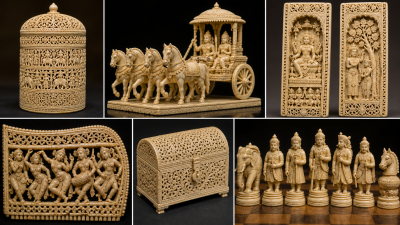
Ivory carving, known as Danta Shilpa, is one of India’s oldest artisanal traditions, dating back to the Harappan Civilization. The craft evolved from utilitarian objects to highly sophisticated religious and royal artifacts, peaking under the patronage of the Satavahanas, Guptas, and Mughals.
Ancient Foundations and Archaeological Evidence
- Indus Valley Civilization: Excavations at Mohenjo-daro and Lothal revealed ivory combs, hairpins, dice, and small figurines, establishing the antiquity of the craft.
- Satavahana Period: The Begram Ivories, discovered in Afghanistan but attributed to Indian craftsmen (likely from the Vidisha region), showcase exquisite relief work depicting palace life and feminine beauty.
- The Vidisha Guild: An inscription on the Southern Gateway of the Sanchi Stupa records that the ivory carvers of Vidisha (Dantakaras) executed the stone carvings, highlighting the fluidity between ivory and stone sculptural techniques.
Regional Centers and Specialized Styles
India developed distinct regional schools of ivory carving, each influenced by local aesthetics and available patronage.
| Region | Primary Style/Product | Notable Features |
| Karnataka (Mysuru) | Inlay Work and Statuettes | Known for ‘Rosewood with Ivory Inlay’ and intricate Krishna/Goddess figures. |
| Kerala (Trivandrum) | Religious Iconography | Specialized in the Gajendra Moksha theme and traditional Kathakali dancers. |
| Odisha | Jagannath Icons | Known for small, detailed thrones and icons of the Puri deities. |
| Rajasthan (Jaipur) | Jewelry and Bangles | Famous for bridal ivory bangles (Choodas) and miniature painting on ivory. |
| West Bengal (Murshidabad) | Fine Relief Work | Mastered the ‘Ambari Elephant’—a caparisoned elephant with a royal howdah. |
Masterpieces and Iconography
The sculptural depth of ivory allowed for a level of detail often impossible in stone or wood.
- Dashavatara Strips: Exquisite plaques depicting the ten incarnations of Vishnu, often found in medieval South Indian collections.
- The Madurai School: Produced large, complex ivory figures of the Nayaka period, often characterized by heavy ornamentation and dynamic poses.
- Mughal Portraits: During the 17th century, the Mughals commissioned miniature portraits painted on thin ivory sheets, a tradition that later merged with the Delhi and Jaipur schools of painting.
Technical Processes in Ivory Sculpture
The process of transforming a raw tusk into a sculptural masterpiece involves several stages:
- Seasoning: Raw tusks are seasoned for years to prevent cracking.
- Softening: Ancient texts suggest using herbal decoctions to soften ivory before intricate carving.
- Carving Tools: Craftsmen use delicate chisels, files, and scrapers (bhawari) to etch patterns.
- Polishing: Traditionally achieved using fish scales or fine sand to give the surface a translucent, glass-like finish.
Trivia and Fact-Check for Aspirants
- Guild System: The Dantakara (ivory carver) was a prestigious position in the ancient Shreni (guild) system, often enjoying proximity to the royal courts.
- Foreign Trade: Indian ivory was a major export item to the Roman Empire and Ancient Greece; the “Ivory Statuette of Lakshmi” found at Pompeii is a testament to this global reach.
- Symbolism: In Indian aesthetics, ivory represents purity and the moon (Chandra), making it the preferred medium for items related to weddings and religious rituals.
- Modern Legal Status: Under the Wildlife (Protection) Act, 1972, trade in Indian ivory is strictly banned to protect the Asian elephant. Most modern “ivory-style” carvings are now made from bone, sandalwood, or synthetic resins.
Comparison: Ivory vs. Stone Sculpture
- Medium Flexibility: Ivory is more tensile than stone, allowing for extremely thin, undercut elements like the “caged birds” or “latticed windows” found in Bengali ivory works.
- Patina: Unlike stone which weathers, ivory develops a deep creamy patina or “mellowing” over centuries, which collectors use to verify the age of antique sculptures.
- Portability: While stone sculpture was largely architectural, ivory served as the primary medium for “portable shrines” and diplomatic gifts between kingdoms.