
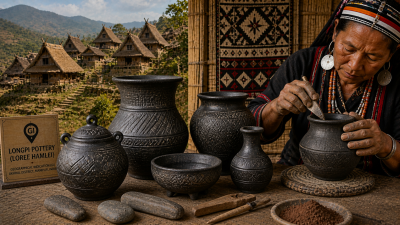
Longpi pottery, also known locally as Loree Hamlei, is an ancient craft originating from the villages of Longpi (Khullen andthel) in the Ukhrul district of Manipur. This craft is exclusively practiced by the Tangkhul Naga tribe. Unlike most Indian pottery traditions that rely on the potter’s wheel, Longpi is unique because it is handcrafted entirely by hand and stone tools, a technique believed to date back to the Neolithic period. Historically, these vessels were considered “royalty ware” in Manipur, used primarily by the Tangkhul elites and for ceremonial purposes.
Raw Materials and Geological Composition
The distinctive quality of Longpi pottery lies in its material composition, which does not involve common clay.
- Weathered Rock: The primary ingredient is serpentinite rock, locally found in the hills of Manipur.
- Black Clay: This rock is crushed and mixed with a specific weathered rock clay (brown clay) in a ratio of approximately 3:2.
- Absence of Chemicals: No synthetic colors, glazes, or chemicals are used in the process, making it one of the most eco-friendly pottery styles in India.
The Crafting Process: A Wheel-less Tradition
The production process of Longpi is labor-intensive and requires high precision.
- Manual Shaping: The mixture of crushed stone and clay is kneaded into a paste. Since no wheel is used, the artisans use wooden molds, bamboo tools, and their hands to shape the vessels.
- Surface Polishing: Once the shape is achieved, the surface is polished using rounded stones and wax to create a smooth texture.
- Open Firing: The pottery is fired in an open bonfire at temperatures reaching 900°C to 1200°C for several hours.
- Smoking and Burnishing: While the pots are still red-hot, they are rubbed with the leaves of the Machi tree (a local wild plant). This process creates the signature lustrous black finish through a natural carbonization process.
Distinctive Features and Functional Benefits
| Feature | Description |
| Color | Naturally deep black with a metallic luster. |
| Texture | Slightly grainy yet smooth to the touch due to stone polishing. |
| Durability | Extremely hard and heat-resistant; can be used directly on a flame or in a microwave. |
| Health Benefits | Non-toxic and non-reactive; known for retaining the nutritional value and flavor of food. |
| Aesthetics | Minimalist and contemporary; often adorned with fine cane or bamboo wickerwork around handles. |
Comparative Analysis: Longpi vs. Traditional Terracotta
| Parameter | Longpi Pottery | Traditional Terracotta |
| Primary Material | Crushed Stone + Clay | Alluvial/Silt Clay |
| Tooling | Hand-molded (No Wheel) | Wheel-turned |
| Firing Method | Open Bonfire | Closed Kiln (usually) |
| Visual Finish | Metallic Black | Earthy Red/Orange |
| Usage | Direct cooking/Modern decor | Storage/Ritualistic/Cooking |
Geographical Indication (GI) and Socio-Economic Significance
Longpi pottery has been recognized under the Geographical Indications of Goods (Registration and Protection) Act, 1999. This status ensures that the “Longpi” name is reserved exclusively for products made in the designated region using traditional methods.
- Tribe Identity: It serves as a vital marker of Tangkhul Naga cultural identity.
- Economic Hub: The village of Longpi is the central hub, where the craft provides a primary source of livelihood, especially during the non-farming seasons.
- Modern Markets: Due to its sleek black look and durability, it has transitioned from traditional kitchenware to high-end lifestyle products sold in global boutique stores.
Key Factoids for UPSC Prelims
- Neolithic Continuity: It is one of the few surviving crafts in India that utilizes prehistoric hand-shaping techniques without a wheel.
- Machi Leaf: The botanical element responsible for the black color; it is a natural resin-rich leaf used for smoking the hot clay.
- Serpentinite Rock: A magnesium silicate mineral that gives the pottery its unique strength and metallic properties.
- Cane Work: Modern Longpi often features “Kouna” (water reed) or cane weaving on the handles to protect the user from heat, showcasing a blend of Manipur’s pottery and basketry traditions.
- Cultural Taboo: Historically, there were certain seasons and rituals during which pottery making was restricted, though modern commercial demand has relaxed these traditional norms.
Current Challenges and Conservation
The craft faces challenges including the physical toll on artisans due to the heavy manual labor involved and the difficulty in sourcing serpentinite rock from hilly terrains. Government initiatives through the North Eastern Development Finance Corporation (NEDFi) and tribal cooperative marketing federations (TRIFED) are promoting Longpi pottery to ensure fair pricing and global exposure for the Tangkhul artisans.
Last Modified: May 5, 2026