
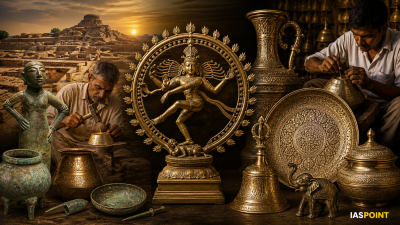
The tradition of metalwork in India is an unbroken chain spanning over 5,000 years. It began with the copper and bronze metallurgy of the Indus Valley Civilization (IVC) and reached its artistic zenith during the medieval and early modern periods. Metal crafts were historically divided into Kanch-tal (bell metal), Riti (brass), and Kansa (copper), with techniques transitioning from purely utilitarian to highly decorative and ritualistic.
Core Techniques of Metal Crafting
Indian metalwork relies on several distinct metallurgical processes that have remained largely unchanged for centuries.
- Cire Perdue (Lost Wax Casting): The most ancient technique where a wax model is encased in clay, the wax is melted out, and molten metal is poured into the cavity. It is widely used by tribal communities for Dhokra art.
- Repoussé: A method of creating patterns by hammering the reverse side of the metal to create a design in low relief.
- Engraving and Etching: Carving designs directly onto the metal surface, often filled with colors or other metals.
- Inlay Work: The process of embedding one metal into another (e.g., silver in zinc as seen in Bidriware).
Major Metal Handicraft Traditions
Metal crafts in India are highly regionalized, often dictated by the availability of specific ores and historical royal patronage.
1. Dhokra Art (Non-Ferrous Casting)
Practiced primarily by the nomadic Ghadwa and Bhartia tribes, Dhokra is one of the earliest known methods of non-ferrous metal casting using the lost-wax technique.
- Regions: Bastar (Chhattisgarh), Odisha, West Bengal, and Jharkhand.
- Features: Distinguishable by its primitive simplicity, use of thin twisted wires for detailing, and lack of any joints. Motifs usually include tribal deities, sun, moon, and animals like elephants and horses.
2. Bidriware (Zinc and Copper Inlay)
This 14th-century craft originated under the Bahmani Sultans and is unique due to its striking contrast of black and silver.
- Region: Bidar (Karnataka) and Hyderabad (Telangana).
- Technique: An alloy of zinc and copper is blackened using a specific soil found only in the Bidar Fort. Silver or gold wires are then inlaid into the engraved patterns.
3. Aranmula Kannadi (Metal Mirror)
A unique metallurgical marvel from Kerala, these are not glass mirrors but are made from a secret alloy of copper and tin.
- Region: Aranmula, Pathanamthitta (Kerala).
- Fact: Unlike glass mirrors where the image is reflected from the back surface, these provide a front-surface reflection, eliminating distortions.
4. Moradabad Brassware (Peetal Nagri)
Moradabad is the hub of India’s brass industry, known for both utilitarian items and ornamental “E.P.N.S.” (Electro Plated Nickel Silver).
- Region: Moradabad (Uttar Pradesh).
- Technique: Includes Nakshi (fine engraving) and Lacquering. The Aftaba (traditional water jug) is a signature product of this region.
Regional Distribution of Metal Crafts
| Craft Name | State | Primary Metal | Distinguishing Feature |
| Pechwa | Rajasthan | Silver | Intricate wire-work used for jewelry and boxes. |
| Koftgari | Rajasthan/Punjab | Steel/Iron | Inlaying gold or silver wire on hard metal surfaces; used for weaponry. |
| Kamrupi | Assam | Brass/Bell Metal | Known for Xorai (offering trays) and Bota. |
| Pembarthi | Telangana | Sheet Metal | Intricate brass carvings used for temple chariots and icons. |
| Nacharkoil | Tamil Nadu | Brass | Traditional lamps (Pavailakku) and bells with ornamental chains. |
| Swamimalai | Tamil Nadu | Bronze | Famous for Chola-style icons and Nataraja statues. |
Ritualistic and Religious Significance
Metalwork in India is deeply intertwined with religious rituals, particularly through the production of Panchaloha idols.
- Panchaloha: A traditional five-metal alloy used for making temple icons. The classic composition includes Gold, Silver, Copper, Zinc, and Iron, though modern versions often substitute lead or tin.
- Thanjavur Art Plates: These involve encrusting metals like copper and silver onto a brass base, typically depicting Hindu deities and floral motifs.
Intellectual Property: Geographical Indication (GI) Tags
The GI tag system protects the traditional knowledge associated with these metal clusters.
- Bastar Iron Craft: Forged by the Lohar community using scrap iron.
- Datia and Tikamgarh Bell Metal: Famous for decorative horses and lamps in Madhya Pradesh.
- Kutch Copper Bells: Known for their unique tonal quality, tuned by hand using a wooden mallet.
- Payyannur Pavithra Mothiram: A unique ring from Kerala made of gold or silver, representing a sacred knot.
Technical Trivia for UPSC Prelims
- Bell Metal: An alloy of copper and tin (usually in a 4:1 ratio), known for its sonorous quality.
- Damascening: The art of encrusting gold or silver wire on iron or steel (similar to Koftgari).
- Historical Reference: The “Dancing Girl” of Mohenjo-daro is the earliest evidence of the lost-wax casting technique in India.
- Statue of Prosperity/Equality: Modern metalwork continues the tradition; for example, the Statue of Equality in Hyderabad is made of Panchaloha.
Institutional Support and Schemes
- Handicrafts Mega Cluster Mission (HMCM): Targets clusters like Moradabad to improve infrastructure and technology.
- National Centre for Design and Product Development (NCDPD): Assists metal artisans in adapting traditional designs for modern international markets.
- Marketing and Service Extension Centres: Provides direct market access to metal artisans through exhibitions like Gandhi Shilp Bazaar.