
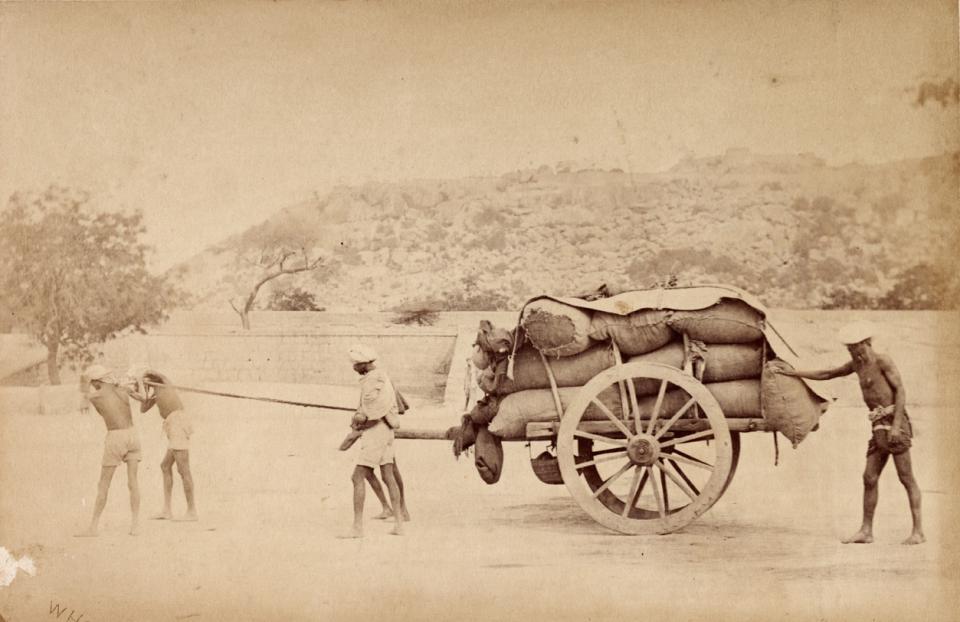
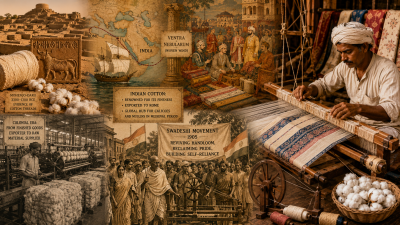
India is the birthplace of cotton cultivation, with its roots tracing back to the Indus Valley Civilization (3300–1300 BCE), where cotton threads were discovered at Mohenjo-daro. Historically, Indian cotton was so renowned for its fineness that it was exported to Rome, where it was called “Ventra Nebularum” (woven wind). During the medieval period, India became the global hub for calicoes and muslins. The colonial era shifted India from a finished goods exporter to a raw material supplier, but the Swadeshi Movement (1905) revived the handloom sector as a symbol of national identity and self-reliance.
Geographical and Agro-Climatic Requirements
Cotton, often referred to as “White Gold,” is a kharif crop that requires specific conditions to produce the high-quality fiber used in traditional handlooms.
- Soil: Thrives best in the Regur (Black Soil) of the Deccan Plateau, which is known for its moisture-retention capacity.
- Climate: Requires a temperature between 21°C and 30°C and at least 210 frost-free days.
- Rainfall: Moderate rainfall of 50 cm to 100 cm is ideal; irrigation is necessary in arid regions like Northwest India.
- Leading Regions: Gujarat, Maharashtra, and Telangana are the top producers, though handloom weaving is geographically dispersed across almost every state.
Diversity of Cotton Weaving Traditions
Indian cotton textiles are categorized by their weaving techniques, motifs, and the type of yarn used. Below are the prominent regional varieties significant for Art and Culture studies:
| Region | Textile Variety | Unique Features |
| Andhra Pradesh | Venkatagiri & Mangalagiri | Known for fine counts and solid “Nizam” borders with gold thread. |
| West Bengal | Jamdani & Dhakai Muslin | Figured muslin; motifs are woven without a mechanical lift, using a needle-like tool. |
| Madhya Pradesh | Chanderi & Maheshwari | Chanderi is famous for its transparency and “Butti” motifs; Maheshwari for its reversible borders. |
| Tamil Nadu | Kanchi Cotton & Negamam | Heavy cotton weaves inspired by temple architecture and checks. |
| Odisha | Sambalpuri Cotton | Uses the Ikat (Bandha) technique where yarn is tie-dyed before weaving. |
| Uttar Pradesh | Lucknowi Chikankari | Though an embroidery, it is inseparable from fine cotton muslins (Addhi). |
Technical Classification of Weaves
- Plain Weave: The simplest form, used in basic handloom fabrics like Khadi.
- Ikat (Warp/Weft/Double): A resistance dyeing technique where the pattern is created by dyeing the yarns before they are put on the loom.
- Extra Weft Technique: Adding decorative threads during the weaving process to create raised patterns, common in Jamdani and Paithani.
Socio-Economic Significance
The handloom sector is the second-largest employer in rural India after agriculture. It is characterized by low capital investment, eco-friendly production, and the preservation of indigenous knowledge.
- Employment: Engages over 35 lakh people directly and indirectly.
- Women Empowerment: Nearly 70% of handloom weavers and allied workers are women.
- Sustainable Fashion: Handloom cotton has a lower carbon footprint compared to powerloom or synthetic textiles due to minimal electricity usage.
Government Schemes and Institutional Support
The Ministry of Textiles implements several policies to safeguard the interests of cotton weavers and promote “Brand India.”
- Handloom Mark: Launched to provide a collective identity to handloom products and guarantee their authenticity to consumers.
- Geographical Indication (GI) Tag: Protects regional specialties like Kandangi Saree (Tamil Nadu) or Kota Doria (Rajasthan) from imitation.
- National Handloom Day: Celebrated on August 7th to commemorate the launch of the Swadeshi Movement in 1905.
- Mudra Scheme: Provides subsidized credit to weavers for purchasing raw materials and upgrading looms.
- E-Dhaga App: A digital platform to ensure the supply of quality yarn at subsidized rates to weavers.
Key Facts for UPSC Prelims
- Species Grown: India is the only country in the world that grows all four species of cultivated cotton: Gossypium arboreum, G. herbaceum, G. hirsutum, and G. barbadense.
- Kasturi Cotton: The premium brand name launched by the Government of India to represent Indian cotton in the international market.
- Sujini: A traditional cotton quilting technique from Bihar, often confused with embroidery, used to repurpose old cotton cloths.
- Difference between Handloom and Powerloom: Handlooms rely on manual labor for the movement of the shuttle, whereas powerlooms use electric motors; handloom products often have a “human touch” with slight irregularities that signify authenticity.