
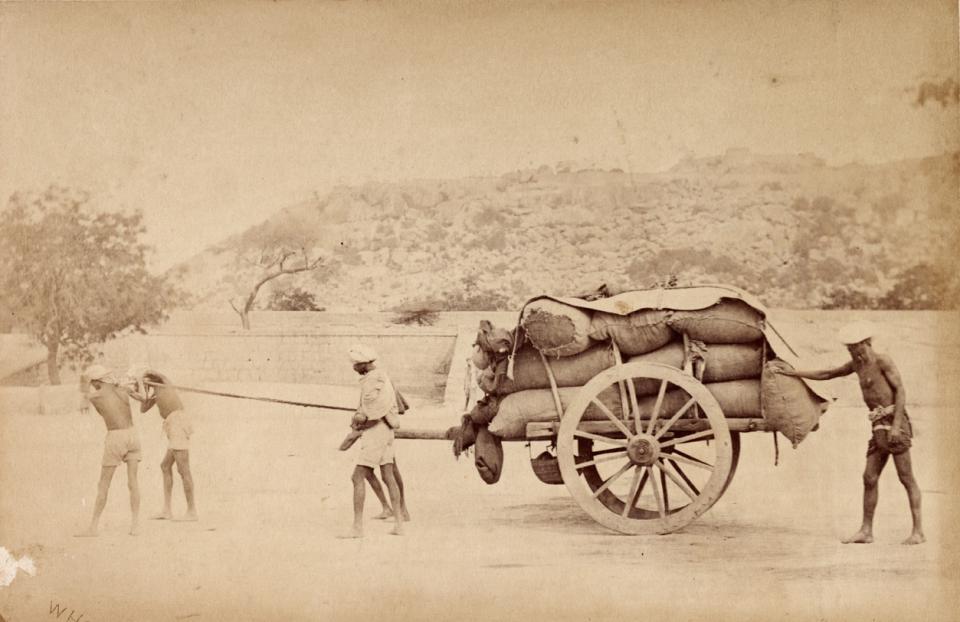
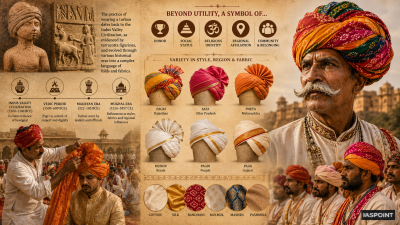
The turban, known by various regional names like Pagri, Safa, Pheta, or Paag, is a quintessential element of Indian heritage. Historically, it served as a functional headgear to protect against the harsh tropical sun and dust. However, in the context of Indian Art and Culture, it transcends utility to symbolize honor, social status, religious identity, and regional affiliation. The practice of wearing a turban dates back to the Indus Valley Civilization, as evidenced by terracotta figurines, and evolved through the Vedic, Mauryan, and Mughal eras into a complex language of folds and fabrics.
Regional Variations and Distinctive Styles
India’s diverse geography has birthed distinct styles of draping, each reflecting the local climate and social mores.
Rajasthan: The Land of Safas and Pagris
Rajasthan is considered the heartland of turban diversity. The style and color often change every 15–20 kilometers, reflecting the local saying, “The water changes every mile, the language every four miles, and the turban every twelve.”
- Jodhpuri Safa: Known for its elegance and long tail (palla), often made of Leheriya (tie-dye) fabric.
- Mewari Pagri: Typically smaller and more compact, symbolizing the martial pride of the Udaipur region.
- Bishnoi Turban: Characteristically white, representing purity and the community’s environmental ethics.
Maharashtra: The Pheta and Puneri Pagri
- Puneri Pagri: A symbol of pride and knowledge in Pune, it was popularized during the Peshwa era. It is uniquely shaped, featuring a distinct “beak” and a stiff structure. It was granted Geographical Indication (GI) status in 2009.
- Kolhapuri Pheta: Usually worn in saffron (Bhagawa) or white, often seen during weddings and festive processions.
Punjab: The Dastar
For the Sikh community, the Dastar is a mandatory article of faith, symbolizing self-respect, courage, and piety.
- Patiala Shahi: Characterized by many layers (pechs) on both sides, giving it a symmetrical and sharp appearance.
- Dumalla: A traditional, conical style often worn by the Nihang warriors, frequently adorned with Shastras (small weapons).
Southern and Eastern Variants
- Mysuru Peta: The traditional headgear of the Wadiyar dynasty. It is made of silk and often brocaded with gold lace (Zari). It is now a symbol of intellectual achievement and honor in Karnataka.
- Kodava Vastara: Worn by the people of Coorg, it is a red and gold checked turban.
- Paag (Mithila): A unique headgear from the Mithila region of Bihar, dating back to the pre-Mughal era, symbolizing the cultural identity of the Maithils.
Textiles and Weaving Techniques in Turban Making
The production of turbans involves specific weaving and dyeing techniques that are integral to the Indian textile industry.
| Technique | Region | Description |
| Leheriya | Rajasthan | A wave-like tie-dye pattern used for vibrant Safas. |
| Bandhani | Gujarat/Rajasthan | Intricate dot-patterned tie-dye, often used for celebratory turbans. |
| Zari Work | Varanasi/Mysuru | Incorporation of gold or silver threads into the borders or body of the fabric. |
| Kota Doria | Kota, Rajasthan | Lightweight, translucent fabric with square patterns (khats), ideal for summer turbans. |
| Chanderi/Maheshwari | Madhya Pradesh | Fine silk and cotton blends used for aristocratic headgear. |
Symbolic Use of Colors and Occasions
Colors in Indian turbans are rarely accidental; they convey specific messages or mark particular seasons.
- Saffron (Kesari): Represents valor, sacrifice, and knowledge.
- White: Symbolizes peace, purity, and is often worn by elders or during mourning in certain communities.
- Bright Red/Pink: Predominantly used during weddings and auspicious ceremonies.
- Yellow (Basanti): Associated with the spring festival (Basant Panchami) and harvest.
- Dark Green: Frequently used by the farming community or during certain religious observances.
Trivia and Quick Facts for UPSC Prelims
- GI Tags: The Puneri Pagri and the Mysuru Peta are notable turbans that have received Geographical Indication protection.
- The Turban Museum: Located in Jaipur, Rajasthan, it houses one of the largest collections of turbans in the world.
- Social Practice: The ceremony of Pagri Rasam (Turban Ceremony) marks the transition of leadership/responsibility to the eldest son after the death of the family patriarch.
- Dimensions: A standard Safa is approximately 9 meters long and 1 meter wide, though variations like the Scindia turban can require much more fabric.
- Architecture Link: Some historical forts and Havelis in Rajasthan have dedicated “Turban Rooms” (Pagri Khana) to store and maintain the royal headgear.
Cultural Evolution and Modern Significance
While modern attire has seen a decline in daily turban wearing, it remains an indispensable part of Indian weddings, political rallies, and state ceremonies. In the Indian Armed Forces, several regiments, including the Sikh, Rajput, and Jat Regiments, incorporate the turban into their formal uniform, maintaining the link between the headgear and martial valor. From the Dastar of Punjab to the Peta of Karnataka, the turban continues to serve as a visual shorthand for India’s “Unity in Diversity.”
Last Modified: May 6, 2026