
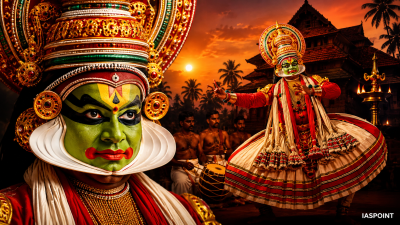
Kathakali is a highly stylized classical dance-drama from Kerala, characterized by its “total theater” approach that combines dance, music, poetry, and drama. The name is derived from Katha (story) and Kali (play). It is primarily a male-dominated art form, though modern troupes increasingly include women. Philosophically, Kathakali represents the Sky (Ether) element among the five elements (Panchabootham).
Historical Evolution and Origins
The roots of Kathakali lie in the ancient temple arts and folk theater of Kerala.
- Ancestral Forms: It evolved from two earlier traditions: Ramanattam (based on the Ramayana, created by the Kottarakkara Thampuran) and Krishnanattam (based on the life of Krishna, created by the Zamorin of Calicut).
- Martial Influence: The physical training and body movements are deeply influenced by Kalaripayattu, the ancient martial art of Kerala, emphasizing strength and stamina.
- The Revival: After a period of decline under colonial rule, the poet Vallathol Narayana Menon revived the form in 1930 by establishing the Kerala Kalamandalam, which remains the premier institution for Kathakali training.
Make-up and Character Types (Vesham)
Kathakali is globally recognized for its elaborate make-up and costumes. The make-up is not merely decorative but identifies the psychological traits of the characters.
| Make-up Type | Character Trait | Examples |
| Pacha (Green) | Noble, virtuous, and divine (Satvik). | Krishna, Rama, Arjuna, Nala. |
| Kathi (Knife) | Royal but arrogant or evil (Rajasic). Features a red mark on the cheek. | Ravana, Duryodhana, Kichaka. |
| Chuvanna Thadi (Red Beard) | Vicious, extremely evil, and power-hungry (Tamasic). | Dushasana, Bakasura. |
| Vellathadi (White Beard) | Pious, divine, and saintly beings. | Hanuman. |
| Karutha Thadi (Black Beard) | Primitive, forest-dwellers, or hunters. | Kali (the demon), Kiratha. |
| Minukku (Radiant/Polished) | Gentle, feminine, and intellectual. Warm yellowish-orange make-up. | Sita, Draupadi, Narada, Sages. |
Core Technical Elements and Grammar
Kathakali follows the principles of the Natya Shastra and the Hasta Lakshana Deepika (the primary text for its hand gestures).
Abhinaya (Communication)
The dance relies heavily on Netra Abhinaya (eye movements). Dancers use a seed called Chundappoo to turn the whites of their eyes red to enhance emotional intensity.
- Angika Abhinaya: Intense body language and stylized movements.
- Vachika Abhinaya: Provided by the background singers (Bhagavathars); the actors do not speak but use gestures to translate the lyrics.
- Satvika Abhinaya: Deep internal emotional expression, such as trembling or tears.
- Aharya Abhinaya: The most complex element, involving heavy wooden headgears (Kireedam), oversized skirts, and intricate jewelry.
The Mudra System
Kathakali employs 24 fundamental mudras (hand gestures) which can be combined to form over 470 meanings. Unlike other forms, it uses the Hasta Lakshana Deepika rather than the Abhinaya Darpana.
Musical and Rhythmic Structure
The performance is governed by a distinct musical style unique to Kerala.
- Sopana Sangeetham: The traditional vocal style, characterized by a slow, rhythmic, and meditative tempo suitable for temple environments.
- Manipravalam: The language of the songs, which is a blend of Sanskrit and Malayalam.
- Instruments:
- Chenda: A vertical cylindrical drum used for vigorous and heroic scenes.
- Maddalam: A horizontal drum used for delicate and feminine scenes.
- Ilathalam: Large cymbals to maintain the tala (rhythm).
- Chengila: A gong used by the lead singer.
Performance Rituals and Structure
Traditional performances occur in the Kootampalam (temple theater) and last an entire night.
- Todayam: A devotional dance performed behind the curtain to invoke the gods.
- Melappadam: A rhythmic showdown between the percussionists to showcase their skill.
- Purappadu: The formal debut of the main character on the stage.
- Keli: A drum call to announce the start of the performance to the nearby village.
- The Oil Lamp (Nilavilakku): All performances take place in the light of a single large oil lamp, symbolizing the presence of the divine.
Fact Sheet for UPSC Prelims
- UNESCO Recognition: Kathakali was inscribed in the UNESCO Representative List of the Intangible Cultural Heritage of Humanity.
- Conflict Motif: The central theme of every Kathakali play is the eternal conflict between Dharma (righteousness) and Adharma (evil), usually ending with the victory of Dharma.
- Movement Style: Characterized by wide-spread knees and movements that mimic the sway of the ocean and trees.
- Training: It is known for having the most rigorous training period (often 8–10 years) among all classical dances.
- Contemporary Shifts: While traditionally performing the Ramayana and Mahabharata, modern Kathakali has adapted Shakespearean plays (e.g., King Lear) and biblical stories.
Notable Proponents
- Kalamandalam Ramankutty Nair: A master of the Pacha and Kathi roles.
- Kalamandalam Gopi: Renowned for his portrayal of noble heroes.
- Kottakkal Sivaraman: Famous for revolutionizing female roles (Sthrivesham) in Kathakali.
- Guru Kunchu Kurup: The first Kathakali artist to receive the Sangeet Natak Akademi Fellowship.