

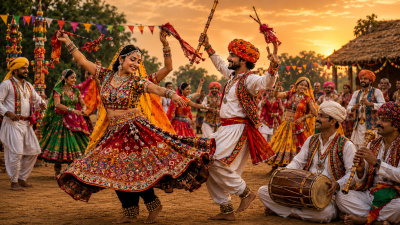
Unlike classical dances, which are governed by the strict tenets of the Natyashastra, Indian folk dances are spontaneous, ethnic, and regional expressions of joy. They are primarily performed to celebrate the arrival of seasons, the birth of a child, weddings, and successful harvests. These dances are characterized by their simplicity, rhythmic energy, and the use of local costumes and indigenous musical instruments.
Classification of Folk Dances by Region
The diversity of India’s folk traditions is best understood through a geographical classification, highlighting the distinct cultural ethos of each state.
Northern India
- Rauf (Jammu and Kashmir): Predominantly performed by women during the harvest season (Eid and Ramzan). It involves two rows of women facing each other, performing intricate footwork.
- Hikat (Jammu and Kashmir): Performed by young girls and boys; participants hold hands and spin in circles.
- Bhangra (Punjab): A high-energy dance performed by men to celebrate the harvest (Baisakhi). It is accompanied by the heavy beats of the Dhol.
- Gidda (Punjab): The feminine counterpart to Bhangra, characterized by clapping (boli) and graceful movements.
- Nati (Himachal Pradesh): Listed in the Guinness World Records as the largest folk dance; it is a slow, rhythmic circle dance performed during festivals like Kullu Dussehra.
Western India
- Garba (Gujarat): Performed during Navratri, participants move in concentric circles around a “Garbha Deep” (lamp). It was inscribed on the UNESCO Intangible Cultural Heritage list in 2023.
- Dandiya Raas (Gujarat): A mock-fight between Goddess Durga and Mahishasura, performed using polished wooden sticks.
- Ghoomar (Rajasthan): Traditionally performed by Bhil tribe women for Goddess Saraswati and later adopted by Rajput royalty. It involves graceful gyrating movements in colorful ghaghras.
- Kalbelia (Rajasthan): Known as the “Snake Charmer Dance,” performed by the Kalbelia tribe. The movements and costumes resemble serpents. It is a UNESCO-recognized Intangible Cultural Heritage.
- Lavani (Maharashtra): A combination of traditional song and dance performed to the beats of the Dholki. It is known for its powerful rhythm and erotic or social themes.
Central India
- Gaur Maria (Chhattisgarh): A ritualistic dance of the Maria Gonds of Bastar, mimicking the movements of the bison. Dancers wear headgears with bison horns.
- Matki (Madhya Pradesh): Performed by nomadic tribes, where women balance several earthen pots (Matkis) on their heads while dancing.
- Pandavani (Chhattisgarh): A narrative folk ballad that includes dance-like movements, depicting stories from the Mahabharata. Teejan Bai is its most famous exponent.
Eastern and North-Eastern India
- Bihu (Assam): The most popular folk dance of Assam, performed during the three Bihu festivals. It features rapid hand movements and brisk steps.
- Chhau (West Bengal, Odisha, Jharkhand): A semi-classical mask dance with martial, tribal, and folk origins. There are three styles: Seriakella (Jharkhand), Purulia (West Bengal), and Mayurbhanj (Odisha). It is a UNESCO Intangible Cultural Heritage.
- Jat-Jatin (Bihar): Performed by couples, it depicts the tender quarrels and life of a husband and wife.
- Cheraw (Mizoram): Also known as the “Bamboo Dance,” where men tap bamboo horizontal poles while women step in and out of them rhythmically.
Southern India
- Yakshagana (Karnataka): A unique dance-drama that combines dance, music, dialogue, and heavy makeup. It traditionally depicts stories from the Puranas.
- Theyyam (Kerala): A ritual dance performed in temples to worship local deities. It is characterized by elaborate headgears and facial painting.
- Karakattam (Tamil Nadu): An ancient folk dance performed in praise of the rain goddess Mariamman, where dancers balance a pot (Karakam) on their heads.
- Dhimsa (Andhra Pradesh): A tribal dance performed by the Porja tribe in the Araku Valley to establish friendship between villages.
Comparative Analysis of Tribal and Martial Folk Dances
| Category | Dance Form | State | Primary Feature |
| Martial | Kalaripayattu | Kerala | Considered the mother of all martial arts, involves weaponry. |
| Martial | Thang-Ta | Manipur | Uses the sword (Thang) and spear (Ta). |
| Martial | Gatka | Punjab | Sikh martial art performed during Gurpurab. |
| Martial | Paika | Odisha | Performed by the warrior class, involving high leaps and shield work. |
| Tribal | Tarpa | Maharashtra | Performed by Warli tribes using a wind instrument called Tarpa. |
| Tribal | Bagurumba | Assam | Performed by the Bodo tribe; also known as the “Butterfly Dance.” |
| Tribal | Chang Lo | Nagaland | Performed by the Chang tribe to celebrate victory over enemies. |
Key Musical Instruments in Folk Traditions
- Percussion: Dholak (North India), Pung (Manipur), Chenda (Kerala), Thavil (Tamil Nadu).
- Wind: Bansuri, Algoza (Punjab/Rajasthan), Pepa (Assam – made of buffalo horn).
- String: Ektara (West Bengal/Sufi music), Kamaicha (Rajasthan), Ravanahatha (Rajasthan).
- Cymbals: Manjira, Kartal, Jhanj.
Significant Facts for UPSC Prelims
UNESCO Intangible Cultural Heritage List
India has several dance-related elements on this prestigious list, which is a frequent topic in Prelims:
- Koodiyattam (2008): Sanskrit Theatre from Kerala.
- Ramlila (2008): Traditional performance of the Ramayana.
- Vedic Chanting (2008).
- Ramman (2009): Religious festival and ritual theatre of Garhwal, Uttarakhand.
- Chhau Dance (2010).
- Kalbelia Folk Songs and Dances of Rajasthan (2010).
- Buddhist Chanting of Ladakh (2012).
- Sankirtana (2013): Ritual singing, drumming, and dancing of Manipur.
- Garba of Gujarat (2023).
Trivia and Unique Aspects
- Siddi Dhamal: A unique dance form of the Siddi community in Gujarat, who are of African descent. It involves tossing a coconut in the air and breaking it on the head.
- Dollu Kunitha: A major drum dance of Karnataka, performed by the Kuruba community to worship Lord Beeraleshwara.
- Goti Puas: In Odisha, young boys dress as women to perform this precursor to Odissi; it is considered a bridge between folk and classical forms.
- Buta Kola: A spirit worship ritual from coastal Karnataka (Tulu Nadu), similar in aesthetic to Theyyam.
- Bideshiya: A popular folk theatre/dance of Bihar created by Bhikhari Thakur, focusing on social issues and migration.