
The Indus Valley Civilization (IVC), flourishing during the Bronze Age (c. 3300–1300 BCE), exhibited a remarkably sophisticated urban culinary culture. The Harappan kitchen was not merely a space for food preparation but a reflection of advanced pyrotechnology, extensive trade networks, and a deep understanding of seasonal agriculture.
Archaeological Evidence and Spatial Organization
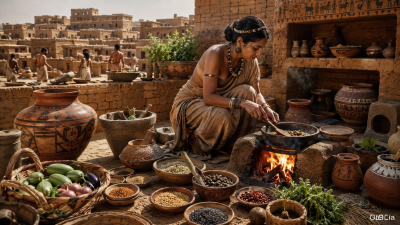
Excavations at sites like Mohenjo-daro, Harappa, and Kalibangan reveal that kitchens were typically located in a dedicated corner of the courtyard or in a small room adjacent to it.
- Cooking Structures: Use of chulhas (earth-baked kilns) and ovens (tandoors) was common. At Kalibangan, both underground and overground ovens were discovered, mirroring contemporary traditional Indian cooking styles.
- Storage Systems: Massive granaries (e.g., the Great Granary at Harappa) and household storage jars indicate a surplus economy and a systematic approach to food security.
- Drainage: Kitchens were connected to the elaborate Harappan street drainage system through pottery pipes and chutes to manage liquid waste.
The Harappan Food Basket: Primary Staples
The Harappan diet was predominantly Mediterranean-style, based on a “multi-cropping” system that utilized both summer (Kharif) and winter (Rabi) cycles.
| Food Category | Major Items Identified | Key Archaeological Sites |
| Cereals | Wheat (Bread and Dwarf), Barley (Six-row), Millets, Rice | Harappa, Mohenjo-daro, Lothal, Rangpur |
| Pulses | Chickpea, Green Gram (Moong), Black Gram (Urad), Peas | Kalibangan, Chanhu-daro |
| Oilseeds | Sesame (Til), Mustard, Linseed | Harappa, Chanhudaro |
| Fruits/Nuts | Dates, Jujube (Ber), Grapes, Melons | Lothal, Harappa |
Domestication and Animal Protein Sources
Harappans consumed a wide variety of animal products, evidenced by charred bone remains and dental microwear analysis.
- Domesticated Animals: Cattle (Zebu/Bos indicus), buffalo, sheep, goats, and pigs were the primary sources of meat and dairy.
- Dairy Culture: Recent lipid residue analysis of pottery shards from Kotada Bhadli (Gujarat) confirms the processing of milk into curd, ghee, and cheese as early as 2500 BCE.
- Aquatic Resources: Fish (both freshwater and marine) and mollusks were significant, especially in coastal sites like Dholavira and Lothal. Specialized copper fish-hooks have been recovered from these regions.
- Wild Game: Hunting of deer, antelope, and wild boar supplemented the diet.
Culinary Techniques and Flavors
Harappan cuisine was far from bland; it involved complex processing and seasoning.
- Grinding and Milling: Saddle querns (stone grinders) were ubiquitous in Harappan households, used for grinding grain and spices.
- Spices and Seasoning: Micro-botanical remains (starch granules) suggest the use of turmeric, ginger, and garlic. Traces of these have been found in cooking pots and even on the teeth of individuals buried in cemeteries.
- Cooking Media: Sesame oil and mustard oil were the primary fats, alongside animal fats and clarified butter (ghee).
- Salt: While organic traces are hard to find, the proximity of many sites to the Rann of Kutch and Rajasthan’s salt lakes suggests its widespread use.
Material Culture: Kitchenware and Utensils
The Harappan pottery, mostly red and black-on-red ware, was highly functional and standardized.
- Primary Vessels: Included storage jars, cooking pots (handis), basins, and perforated jars (possibly used for brewing or straining curd).
- Serving Ware: Goblets with pointed bases, plates, and bowls made of terracotta, steatite, or faïence.
- Tableware for the Elite: Use of silver and copper vessels has been noted in wealthier quarters, indicating social stratification in dining habits.
Specialized Features and Trivia
- The “Curry” Origin: Some archaeologists argue that the Harappan combination of turmeric, ginger, and garlic represents the world’s oldest known “curry” recipe.
- World’s Oldest Ploughed Field: Discovered at Kalibangan, showing a grid pattern for simultaneous cropping of two different vegetables/grains.
- Alcoholic Beverages: Evidence of fermentation has been suggested through the presence of large, pointed-bottom jars and specific yeast residues, indicating the possible production of grain-based beer or mead.
- Sweeteners: In the absence of refined sugar, honey and dates were the primary sweetening agents.
Impact of Climate on Culinary Shifts
As the civilization progressed into the Late Harappan phase, a shift from wheat/barley toward drought-resistant millets (like Bajra and Jowar) is observed. This adaptation was a direct response to the weakening of the monsoon and the drying up of the Saraswati River system, showcasing the resilience of Harappan culinary practices.
Last Modified: May 7, 2026